Friday, August 26, 2011

Friday's Forgotten or Overlooked Books: THE ALBUM by Mary Roberts Rinehart.


If it's Friday, it's Forgotten Book day. This is the weekly meme hosted by Patti at her blog, PATTINASE Don't forget to check the link to see what other Forgotten Books other bloggers are talking about.

Even if the title is a bit misleading, THE ALBUM is certainly one of Mary Roberts Rinehart's best. I got my hands on a first edition with the original pen and ink gallery illustrations of the of characters. No dust jacket and it's a library copy, but I don't care. I loved holding and reading the thing. (I love the thick paper used in these old hardcovers.) I

THE ALBUM is one of those atmospheric mysteries full of suspense and dreadful doings among the 'genteel' upper classes in an early 20th century Midwestern town. (I'm assuming mid-west, but it could just as easily be Pennsylvania or upstate New York. The exact reality of the setting is never made clear.)

Couldn't find a really nice copy to show you, but John over at Pretty Sinister Books had a cover scan in his files. Thanks, John!

I'm currently reading three Mary Roberts Rinehart books (in a handy anthology) during meals so as not to interfere with my other reading. Hey, it's my way. She is one of the Golden Agers I've been reading and enjoying for awhile - every now and then I binge on her work. Not everything she writes is choice, but enough of it is to make the effort of looking for her books worthwhile. I'm really crazy about her novels. Turns out that most of her work is available in e-book format for pennies. Not for me, but it's good to know if you don't mind reading from screens.

My favorites of Rinehart's books, so far:

THE YELLOW ROOM
EPISODE OF THE WANDERING KNIFE
THE CIRCULAR STAIRCASE
THE DOOR
THE ALBUM
THE AFTER HOUSE
THE WALL
THE WINDOW AT THE WHITE CAT
THE MAN IN LOWER TEN
THE BAT

******************************

We had lived together so long, the five families in Crescent Place, that it never occurred to any of us that in our own way we were rather unique. Certainly the older people among us did not realize it; and I myself was rather shocked when Helen Wellington, after she married Jim and came there to live, observed that we all looked as though we walked out of an album of the nineties..

"Including that iron clamp the photographers used to use to hold the head steady," she said. "You're a stiff-necked lot, if ever I saw any."

I dare say she was right. Not long ago I was looking over the old red plush album which played such an important part in solving the crimes of which I am about to tell...

...Just how unique we were, however, none of us, including Helen Wellington herself, probably realized until after our first murder. Then, what with police and newspaper men digging about our intermingled roots, it began to dawn on me that we were indeed a strange and perhaps not very healthy human garden.

The story of the society enclave known as The Crescent is revealed by the book's first person narrator, 28 year old Louisa Hall. She is a dutiful only daughter who has given up dreams of marriage to live in a kind of  psychological servitude to her steel-willed mother, a widow still in complete mourning twenty years after the death of her husband. The Crescent is an exclusive housing development. Five large homes with manicured lawns, tall trees and privacy hedges located on an isolated semi-circular dirt road.

As I said, a genteel sort of place. Until bed-ridden Mrs. Lancaster is hacked to death with an axe.

Several more murders follow and it's clear almost from the beginning that the killer must belong to one of the five families that live in The Crescent.

A dark, moody, murderous tale with an ending that makes for a grim surprise.


Thursday, August 25, 2011

Quote / Unquote


I like this approach. Words to live by.

This wonderful tea towel (and quote) came to my attention at content in a cottage. It is the work of studiopatro, designers of linens, aprons, bags and other assorted fabric kitchen paraphernalia. Their mantra: Just Be Splendid.

As I said, I like the approach.

5 Best Books: 5 Best Genre Reads


5 Best Books is a weekly meme hosted by Cassandra at her blog, INDIEREADERHOUSTON Each week we're handed a new topic - this week, 5 Best Genre Reads.

Well, it's no big secret around here that my favorite genre is Mystery/Thrillers.

But I don't want to repeat myself and keep naming and talking about the same books over and over. We all know that my favorite mysteries list would begin with THE BEEKEEPER'S APPRENTICE and O JERUSALEM, both by Laurie R. King. (And probably THE MOOR, also by King.) The next would be THE HOUND OF THE BASKERVILLES followed by any of the assorted favorites I normally talk about or list here at blog central - Agatha Christie or Rex Stout or Ngaio Marsh, or Robert Crais, the usual suspects.

So, to avoid constantly haranguing you with the same titles and just to keep things fresh, I'm going to go out on a limb and pick 5 entirely different titles -  favorite books I've hardly ever talked about before.


1) RIVER OF DARKNESS by Rennie Airth.

While England recovers from the insanity of WWI, a horrible crime is discovered in a small Surrey village - an entire household butchered. The police, baffled, assume the gruesome scene is the result of a botched robbery. But war veteran and Scotland Yard Inspector, John Madden thinks otherwise. Still grieving the death of his own wife and child, the soulful Madden suspects a madman may be on the loose.

With the help of a country doctor (who happens to be a woman), he learns about the new science of criminal psychology. RIVER OF DARKNESS has the somber feel of another book with a similar theme, THE ALIENIST by Caleb Carr, but I think, Airth's book is a slight cut above. (Though I am a big fan of THE ALIENIST as well and would name it on any 100 Best List.)


2) THE EAGLE HAS LANDED by Jack Higgins.

'Eagle' is the code name the Nazis have given Winston Churchill. The British Prime Minister is the intended target of an ace group of German commandos who have been ordered by Hitler to either kidnap or kill Churchill. (A desperate attempt to reverse the direction of the war.) Now we all know that Churchill was never kidnapped or killed by anyone, but that doesn't lessen the intrigue and suspense as Jack Higgins unfolds this very clever story. One of my all time favorite WWII thrillers.


3) BOOKED TO DIE by John Dunning.

Tough guy Denver cop and rare book collector, Cliff Janeway debuts in the first novel - published in 1992 - of a series which I read as much for the book lore and collecting tidbits as I do for the mystery.

When a local book 'scout' (a person who has a talent for 'scouting' out the odd rare or collectible title among the dross then passing it on to dealers - a kind of middle man) is murdered, Janeway is sure he knows who the killer is. But 'knowing' and proving are two different things. When the frustrated cop goes too far in his attempts to hook a slippery local hood for the crime, he is summarily kicked off the force.

With his book expertise, what else is Janeway to do but open a bookstore and continue hunting for the killer? Makes sense to me. Especially when books from a famed and coveted collection begin popping up, not to mention more dead bodies.

This is a terrific series filled with all sorts of book tips and collecting info which, I find fascinating.


4) ORCHESTRATED DEATH by Cynthia Harrod-Eagles.

The book that introduced the stalwart and intrepid London police inspector, Bill Slider. This series is many books along, but since it's one of the best police procedurals out there (with a great cast of recurring characters), I suggest going back to the very beginning (1991) and just dive in. I've read every book except, I think, the very latest and can vouch for how plainly terrific they are. Harrrod-Eagles is a historical novelist, but some part of her, obviously, knows and loves gritty police work.

When murder upends the world of classical music in the form of a local symphony orchestra, Slider and his men and women are brought in to set things to rights and ferret out a killer. The laconic Slider has no clue that this is the case which will completely alter his life.


5) THE BOOK OF Q by Jonathan Rabb.

I always say that this is the book that the DAVINCI CODE should have been. Or, at least, if Jonathan Rabb had written the DAVINCI book, think how fabulous it would have been. Rabb is the writer Dan Brown isn't. Simple as that.

In THE BOOK OF Q, published in 2001, Rabb has fashioned a quixotic thriller which lures you into the secrets of the Catholic Church as a priest working at the Vatican must discover the truth about a recently found ancient scroll.  The Manichaeans, an early Catholic sect of zealots who advocated the supremacy of 'one pure church' were thought to be extinct, but apparently are not. Fearing that the sect has been revived and is seeking to infiltrate and take over the Church, troubled priest Ian Pearse works to solve the dangerous puzzle. Pursued by an assailant, he races against time traveling to the Balkans to find the answer even as the Vatican comes under a deadly attack.

Wednesday, August 24, 2011

What I Watched Last Night: THE STRANGER starring Edward G. Robinson, Orson Welles and Loretta Young


I've seen this movie, directed by Orson Welles, a couple of times over the years and of course the only thing I ever remember was the ghoulish over-the-top ending. But when I saw it again thinking I'd talk about it on the Overlooked Movies meme held every Tuesday I finally realized what a superb botch of a movie it really is.

Here's what I figure: The editing must have been done by committee at the studio. Perhaps Welles wanted to do it and wasn't allowed to? (Wouldn't be the first time.) I don't know the behind the scenes story so I wish someone would let me know what the heck happened to this film.


It starts out to be a great story about the hunting down and destroying of a Nazi war criminal who has escaped Germany at the end of WWII. I mean, what could be better? Though the fact that the screenplay has several writers listed and John Huston and Orson Welles unlisted should have been a tip off to what went wrong. But I didn't know that until recently.

First a few words about the casting.


Loretta Young as Mary Longstreet, a naive, newly married housewife (a part usually tailor made for her) is so out of her depth here that she appears even more goggle-eyed and brittle than usual. She always did have a kind of owly look going on, but it worked for her in lighter films and soap opera. Up against a fiend of a Nazi killer, not so much. She looks simple and gullible and very foolish. Of course, that's the way the part is written so maybe it's not all her fault.


The movie is kind of an odd combination of soap opera and noir thriller. So who knows if any actress could have done any better with the thankless part. And no, the fact that she gets her revenge in the end doesn't make what came before any more palatable.

Edward G. Robinson can do very little wrong as far as I'm concerned. Here he plays Mr. Wilson, a determined Nazi hunter sent from the War Crimes Commission in - I suppose - Nuremberg, Germany, to ferret out and if not capture, kill an infamous Nazi. Wilson's wily single-minded devotion to his mission is commendable, he is the one good thing in the film. Though I question some of his tactics - involving Mary Longstreet's family members in a very dangerous game, for instance - but I suppose any port in a storm is the modus operandi for Nazi hunters. And by the way, why is he sent all alone to track down this most dangerous of escaped villains? An assistant or two would have come in handy. Maybe a bodyguard? But still Robinson makes what he can of the strong-willed, pipe smoking nemesis.

Orson Welles  looks good as the clock fancying new husband, crazed killer and Nazi villain combo. I mean, he practically seethes in every scene. Smoke comes out of his ears. Well, not really, but use your imagination. He is a cauldron of repressed Nazi villainy. He has one great speech at the dinner table in which he talks about the German soul and character, but other than that it's all skulking about, scowling and looking dangerous.(Why he has no German accent is never explained.)

The dinner scene takes place after his marriage to Mary which occurred shortly after Welles (as the newly minted Charles Rankin) has strangled (with his bare hands) a character from his past who has shown up in the sleepy Connecticut town where Rankin has established himself as a gregarious college professor. The victim is a man who had been allowed to escape from prison by the War Crimes Commission in hopes he would lead them to bigger Nazi fish.


The gist of the story:

Mr. Wilson is after a Nazi kingpin and master planner who has, apparently, escaped into 1946 New England. The trail has led Wilson to a small idyllic college town in the Connecticut countryside. (What are the odds?) Here is where the rest of the story will be played out in dramatic fashion.


At the center of town, in the square, is a church with an appropriately fancy antique clock in the tower, a clock whose works need fixing. And who else better to tinker with the works than the evil Nazi? Uh, I mean, Professor Charles Rankin, whose hobby is tinkering with clocks. Unfortunately for him, this is also the well-known hobby of the man being hunted by Wilson.

So it's apparent, really, from the first that the story will be a mano-a-mano duel between good and evil. It's nicely set up that way. The innocent looking, sleepy little town bedecked in white clapboard and peopled with checker playing denizens. Nice touches. There's a good scene in a dark school gymnasium and some interesting byplay as Mr. Wilson scopes out the lay of the land.


Pretty soon he's narrowed down the chase to Professor Rankin and soon after that, he's wormed his way into the family of Mary Longstreet as a guest of her father, a judge and antiques enthusiast. Soon after that Wilson is enlisting Mary Longstreet's younger brother (played by a sincere but very callow looking Richard Long) in his plans. I think we're meant to know that Wilson is good at sizing people up and taking advantage of what's available.


Well, we've seen Rankin strangle a man with his bare hands early on but it's not until he kills the family dog that we are truly made aware of his disgusting villainy - this man will stop at nothing! Before you can say 'now, what', he begins plotting to kill his gullible wife  - he has strung her along with the most absurd of sob stories about his past. She, of course, chooses to believe he is simply misunderstood. Even when Rankin tells her he's recently strangled a man, she decides to run away with him anyway. (She doesn't know, at this point, that he's a Nazi - just a common, garden-variety murderer. But, c'mon, woman, use your intelligence.) I guess she figures what would a Nazi be doing in Connecticut?


Eventually Mary is forced to realize the true nature of the monster she's married and she does get a measure of revenge. It all occurs in the high reaches of the clock tower where everyone has gone (including the townspeople) to watch the end of the story.

Rankin gets an appropriately ghoulish and bizarre death which is meant, I suppose, to make us feel the satisfaction of good finally triumphing over evil. But can any death really be good enough for a man so foul? Here's the problem: the ending is a botch. Badly edited and not especially well shot, much of the intended shock and awe turns to bemusement. It feels like a grand operatic death without the accompanying music. Well, except for the noise of the clock malfunctioning in the steeple. (There should have been at least an aria or two.)


Then, Edward G. Robinson's character makes a flippant remark to Loretta Young's character as he lights his pipe, and the screen goes black. I mean, huh?

I waited for more, but that was it. Obviously somebody none too handy with a scissor had done some heavy-handed slicing and dicing. What else are we to think?

In fact, most of the film is edited in a choppy manner with one scene not necessarily leading to another and occasionally odd camera angles interfering with the action. This is especially apparent in the second half of the film.

The thing that is most bothersome about it all is that it's obvious (despite Loretta Young) this could have been a memorable thriller. A new kind of movie genre: the noir soap opera.

Despite it all, I still say see the movie and make your own judgement. There are elements of it that are affecting and suspenseful. The first half of the film is well enough done. And Orson Welles was always a fascinating screen presence - even with smoke coming out of his ears. Then, of course, there's Edward G. Robinson. Though he's wonderful in just about anything, even he has a hard time saving this one.

But there are some bad films you just have to see for yourself. This is one of them.


Tuesday, August 23, 2011

Top Ten Tuesday - Top Ten Books I've Loved But Never Reviewed


Top Ten Tuesday is the weekly meme hosted by the gals at THE BROKE AND THE BOOKISH. Each week, there's a new topic about which to post our Top Ten choices. This week it's, Top Ten Books We Loved But Have Never Reviewed - for whatever reason.


************************************


1) PARNASSUS ON WHEELS (1917) by Christopher Morley

Morley's wonderful novel is a slow-paced ode to the love of books. It is also a gentle love story as an itinerant and very opinionated book seller named Roger, (selling books out of a wagon - his Parnassus - pulled along by a horse named Peg) and a plump middle-aged spinster named Helen, meet, talk about books and unexpectedly fall in love. I adored this book the first time I read it. I still adore it.


2) THE HAUNTED BOOKSHOP (1919) by Christopher Morley

A kind of sequel to PARNASSUS ON WHEELS, but a separate novel on its own as well. This continues the story of book sellers Roger and Helen (now married and settled in Brooklyn just after WWI). They have given up selling books from a wagon and are now established in their own used books store, PARNASSUS AT HOME.

The story concerns Helen and Roger, two young lovers, mysterious doings, German saboteurs, and a daring race to the rescue. All within the framework of the perfectly realized bookstore of our dreams.


3) THE MAN WHO WAS THURSDAY (1908) by G.K. Chesterton

An intriguing spy 'fantasy' spun as a spy thriller and what writer Kingsley Amis calls, "...the most thrilling book I have ever read."

The paradoxical plot concerns 'the existence of a secret society of revolutionaries sworn to destroy the world.' Each of the seven members of Central Anarchist Council call themselves by the names of the days of the week and the man who was Thursday is not the young poet he appears to be, but a Scotland Yard detective. Who are the others?

Though a bit dated in tone, the gist of the story and the extravaganza of irony at its core, still surprise and resonate. A book that is great fun to read for the deviousness of the writer's mind.


4) BRIDESHEAD REVISITED (1944) by Evelyn Waugh

Supposedly an autobiographical novel based on certain events in Waugh's life, though how much of that is truth is open to question. Regardless, this is one of my favorite books and whether or not you've seen the brilliant BBC Granada Television (starring Jeremy Irons and Anthony Andrews) adaptation done in the 1980's, the book stands ready to be read and appreciated on its own.

The full title of the book is BRIDESHEAD REVISITED The Sacred and Profane Memories of Captain Charles Ryder - so that gives you an instant idea of the tone. One of the most intriguing  things for me, is how the ancient and wondrous house, Brideshead, is made into a separate character occasionally overshadowing the relationships of the humans who inhabit it. The book is a work of art and Waugh's '...finest achievement.'


5) THE GREAT GATSBY (1925) by F. Scott Fitzgerald

As many times as I've read this, I always manage to find something new within its pages. My third favorite book of all time and one of those books I seem to have discovered on my own because I simply don't remember reading it in school - though I think I must have.

The story of Gatsby, a deluded soul who turns himself inside out and reinvents himself all in the hopes of catching the golden ring never ceases to fascinate me.


6) ETHAN FROME (1911) by Edith Wharton

I know a lot of people find this short novel off-putting and maybe a bit silly. But I'm not one of them. I read this in high school ( I had a great English teacher) and loved it instantly. I've read it again and again over the years and each time the grim story of a stoic man who finds love too late to do anything much about it but  - literally - wreck his life and the life of the woman he loves, breaks my heart.


7) BRUNELLESCHI'S DOME (2000) How A Renaissance Genius Reinvented Architecture by Ross King

"This book goes beyond Filippo Brunelleschi to provide a lively picture of medieval Florence, with politicians debating artistic issues, laborers climbing up to the job toting their lunches, and even a war or two taking place on the side...a story of both artistic and human dimensions." Parade.

If you love European history, the behind the scenes wear and tear of artistic achievement and the workings of genius, you will love this book as much as I do.


"The proposed dome [of the city's new cathedral, Santa Maria del Fiore] was regarded far and wide  as all but impossible to build: not only would it be enormous, but its original and sacrosanct design shunned the flying buttresses that supported cathedrals all over Europe. The dome would literally need to be erected over thin air."


8) THE TERRITORIAL IMPERATIVE (1966) A Personal Inquiry Into the Animal Origins of Property and Nations by Robert Ardrey

One of the most influential books of my youth - it changed my life in the way it answered a lot of questions I'd puzzled about for years. The general nature of humans and animals clarified, the profound implications of behavior simplified. And it all made perfect sense, at least to me.

"Recommended with elation...it will be attacked as well as defended for it dares to go out on many an anthropological and biological limb." Clifton Fadiman

"One of the most exciting books about the nature of man that has ever been presented." Newsday


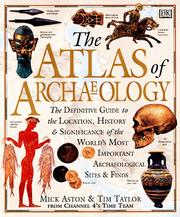
9) THE ATLAS OF ARCHEOLOGY (1998) by Mick Aston and Tim Taylor

One of those splendid, wide-reaching and beautifully designed DK books. All you've ever wanted to know about ancient archaeological sites gathered together in one easy to maneuver, easy to read volume. I love this thing.


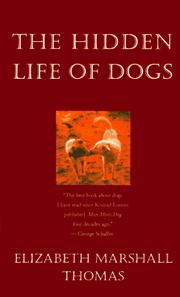
10) THE HIDDEN LIFE OF DOGS (1993) by Elizabeth Marshall Thomas

Writer and anthropologist Elizabeth Marshall Thomas' account of years of study and observation of dogs, wolves and dingoes. This is an eye-opening account of the nature of dogs revealed to someone who was paying attention. Some of Thomas' interpretations may be open to question, but I found this book oddly fascinating and revealing. It isn't possible to completely understand another species, but as far as it can be done, I believe that Thomas's attempt to know what it is that a dog truly wants, has been successful.

Tuesday's Overlooked Films: THE PIRATE starring Gene Kelly and Judy Garland.


This is my entry in Todd Mason's weekly meme of Overlooked Films. Once you're read mine, go take a look at Todd's blog, SWEET FREEDOM, to see what other overlooked films other bloggers are talking about today.

****************************************

Mention MGM golden age musicals and very few will talk about 1948's THE PIRATE starring Gene Kelly and Judy Garland. I don't know why but there's not tons of people who have seen this movie, even fewer have ever heard of it. Maybe it's the insipid title.

Or maybe it's that '48 was the same year that EASTER PARADE with Garland and Fred Astaire came out and perhaps one musical overshadowed the other? I can't figure it. On balance, much as I love Fred and Judy together, I loved her with Gene Kelly more. THE PIRATE remains one of my all time favorite movies.


Here we have Gene Kelly near the zenith of his good looks and athleticism - his dancing never better. We have Judy Garland looking adorable, wearing fetching costumes and singing beautifully. (True, the songs by Cole Porter aren't especially memorable, except for the Be A Clown number and maybe Mack the Black, but they fit nicely into the movie.) The director, Judy's husband Vincente Minnelli, made sure she looked fabulous on camera.


Her performance was, I think, one of her very best. In most of the film her naive persona is tinged with incipient hysteria as she is forced from one frantic situation to another, one lie to another. She is simply delightful.


Gene Kelly looked the ideal song and dance man, especially in the scene where he dances in little black shorts. The man had fabulous legs!


He plays Serafin, an island troubadour with his own traveling troupe of dancers, singers, magicians and actors. One of his tricks is using a revolving mirror to hypnotize any susceptible member of the audience. In the wonderful Mack the Black number he uses it to hypnotize Garland. She plays Manuela, a naive young woman on the verge of marriage to a self-important oaf, Don Pedro Vargas, the town's rich and powerful Major, played by a very pompous Walter Slezak. But I'm getting ahead of myself.

The setting of the story is a 19th century make-believe Caribbean Island (or maybe a South American country near the coast) as imagined by 1940's Hollywood. The art direction by Cedric Gibbons and Jack Martin Smith is terrific, everything looks bright, breezy and colorful, the charming costumes by Tom Keogh are perfection. I love the very saucy little plaid hat that Manuela wears in the opening scenes. I love that most of the women on the island wear broad sun hats, mantillas, flowers or some sort of flamboyant fabric turban. The production values of the entire film (Arthur Freed produced) are exceptional.


The story: Manuela (Judy Garland) is the young ward of her aunt Inez (the wonderful Gladys Cooper) and her husband uncle Capucho (the diminutive Lester Allen whom aunt Inez is always overlooking or bumping into 'cause she doesn't notice him - a funny running gag). Manuela dreams of romance and travel on the high seas, she is mad about the legendary pirate, Mack the Black Macoco, a famous cut throat who plied the Caribbean, scuttling ships and causing general havoc. To the very sheltered Manuela, Mack seems the ultimate romantic ideal.


On the eve of her arranged marriage to Don Pedro (the portly and much older Walter Slezak) Manuela attracts the attention of Serafin (Gene Kelly) who, with his troupe of assorted performers travels from town to town putting on shows. Manuela spurns Serafin's attentions - he's an actor, ugh! - but that night she sneaks out to catch his act as the music drifts up to her room.


Serafin uses a revolving trick mirror to hypnotize Manuela and she performs the razzle-dazzle number, Mack the Black. When it dawns on Serafin that the way to Manuela's heart is to pretend that he is, in fact, the pirate of her dreams, all heck breaks loose.

Gene Kelly is perfection in these scenes as he pretends in a grandiose and over-the-top manner to be the scourge of the Caribbean.


One hilarious thing leads to another and before you know it, Serafin is in the dock, sentenced to death. Through machinations too convoluted to go into here, he has managed to convince everyone that he is, indeed, the infamous pirate. (Be careful what you wish for.) Everyone, that is, except the outraged suitor, Don Pedro. Turns out, he is the actual pirate Macoco - surprise! - now retired. In a devious twist, Don Pedro has gone to the capital to bring back the Viceroy (played by George Zucco) of the island to deal with the pretend Macoco.


On trial for his life, Serafin is allowed one final performance.


All I can say is, every time I see this movie, I love it more and more. If you haven't seen it, you're missing out on one of the best Gene Kelly performances - the over zealous Serafin is perfectly suited to Kelly's zeal as a dancer, performer, actor. The role suits him to a T. No wonder Manuela can't resist him.


Judy Garland really appears to be having fun in this movie. It's hard to believe all the behind the scenes drama going on at the same time. I think, really, this sort of thing is a tribute to the actors' on-screen professionalism.

Be a clown, be a clown. All the world loves a clown!

To watch a two part documentary on the making of THE PIRATE and the controversy behind it's lukewarm reception when it originally opened, please use these links:

Part One. and Part Two.

Monday, August 22, 2011

My Own STAR TREK Next Generation Marathon


Yup. That's what I've been up to the past couple of days. I am not a purist, so it's not only the first STAR TREK (the William Shatner/Leonard Nimoy years) series that I'm loyal to. I absolutely love STAR TREK The Next Generation. Also loved the newest film, a prequel to the original series.

Didn't even realize that Netflix had the seven years worth of  STAR TREK Next Generation episodes all in one handy/dandy fell swoop of an extravaganza. Yes, they do.

So I've been going overboard cruising NEXT GENERATION which for me really began with the third year or so, maybe the fourth. That's when I began watching in earnest. The earlier years I didn't like as much because Jonathan Frakes (as Commander Riker) didn't have a beard and Michael Dorn (as Worf ) didn't have long hair (I like the later Klingon prosthetics better as well). Simple as that. I also wasn't so crazy about Dr. Crusher's son on the bridge. (Though Wesley Crusher did show up in season four, he eventually was done away with...uh, sent off somewhere. Can't remember. Don't care.)

Michael Dorn as Worf.

Much as I love the cast, especially the aforementioned Worf (hubba-hubba), I must say that my main reason for watching is, was and always will be Patrick Stewart as Captain Jean Luc Picard. (All together now, BIG SIGH!) He was superb and should have, of course, won several Emmys if there was any justice and sanity in the world which there obviously isn't.

Patrick Stewart as Captain Jean Luc Picard.

There's method to my madness. I am trying to compile a list of my Five (or maybe Ten) Favorite Next Generation episodes and while I mostly remember what they were, I don't remember the episode titles. So I'm going through the shows having a high old time watching.

Eventually, my list will be up on the blog and then we can all dish about our favorites. For those of you unable to appreciate science fiction or for those purists who refuse to accept the later shows (after the original Star Trek) as valid and true, all I can say is, tawk amongst yourselves while the rest of us have some fun.


Monday Review: MURDER AT SHOTS HALL by Maureen Sarsfield


This is the first of only two mysteries written by an author who was herself a mystery. In the introduction to my no frills Rue Morgue copy of this 1945 book (and thank goodness for small publishers like Rue Morgue and a few others for keeping many golden age books from fading away) it specifically states that  after writing a few books, British writer Maureen Sarsfield 'completely disappeared from the literary landscape. Whether she died young, commenced her short career at an advanced age or simply grew tired of the writing life is unknown.'

Had she continued to write, she would have had a great career judging from this first book featuring Scotland Yard Inspector Lane Parry. 

In my own biased opinion (just from my one googly-eyed reading of this, her first mystery), she was about as good as any of the hallowed Golden Agers - though her plotting was not up to Christie's, everything else about her work was. That such a significant writer should disappear after two books is a crime against literature. But at least we have the two books to remember her work by.

Am I going overboard with praise? Maybe. But I don't think so. We all know when we're in the presence of someone who knows what they're doing.

WWII is ending and in the small gloomy English village named after the ruined great manor house, Shots Hall, a murderer has poisoned four people - three have died. Living in genteel poverty in the tower half of what remains of Shots Hall, partially demolished by a German incendiary bomb, is the enigmatic sculptor Flikka Ashley (known as Flik) and her Aunt Bee Chattock.

36 year old Flikka is the sort of woman with whom men fall instantly in love though she does nothing to lure them except exist. Inspector Parry, once he's on the case, is definitely not immune to her charms. Neither are any of the men in her orbit, especially grumpy and irascible Doctor Abbot who resents like hell the attraction he feels.

The murders in the quiet village appear to have everything to do with Flikka, since two of the victims (the old housekeeper and the gardener) worked for her and her aunt and the third was a friend, the landlord at the pub. To make matters worse, a local village policeman named Arnoldson, an obnoxious, oily creature, has it in for Flika (she spurned his disgusting advances) and would love nothing better than to hang the crimes around her slender neck.

Lane Parry realizes Flikka is certainly holding back information which might crack the case wide open, it is this reticence that makes her the obvious suspect. Though he's not as sure as Arnoldson that Flikka is the murderer. For one thing - where's the motive? For another, he likes her enormously.

Part of the moody charm of MURDER AT SHOTS HALL is the windswept, damp and rainy weather which whips around the village and the ruined Hall and leaves everything wet and muddy, including the long suffering cops. I had to make a cup of tea to keep me company while reading, so brilliant is Sarsfield's gift for creating setting. I could feel the wind and rain, the cold and the overwhelming sense of gloom and doom.

But it's Maureen Sarsfield's ability to create memorable characters which impressed me most. Her talent is so refined that I would have suspected she'd been writing for years if I didn't know better. Flikka herself and her friends and neighbors are instantly alive in these pages. My favorite character being the surly Dr. Abbot of whom I grew very fond. But there's also outspoken Aunt Bee, the thirty-something group of oddly assorted friends, Inspector Lane Parry and the local and sickly police Superintendent, his four dogs and charming wife, the various cops, and the dithery spinster, Miss Merridew.

Hard to believe any one of them hates Flika enough to kill three innocents just to see her hanged for the crime.

Though the author breaks the story into different points of view, she handles it well and I didn't resent this technique (which I usually do) at all. In fact, in this case, I enjoyed the way it was done.

From the first page to the last, I was - dare I say it? - enthralled. I know it's a cliche, but here it is: I could not put this book down. I am very, very eager to read the second book in the Lane Parry series, MURDER AT BEECHLAND published in 1948. Somewhere out there, there is a copy waiting for me.