Friday, October 28, 2011

In Case You Didn't Know...!


I am the bearer of happy tidings. For those of us who have longed for the earlier versions of David Suchet's Hercule Poirot (with Hastings), done with care and affection and general faithfulness to Agatha Christie's actual stories, here's good news:

The first year of the Poirot series is now available on Netflix Streaming. I discovered this by accident, so if everyone else in the world already knows this, then simply tsk, tsk, and move along.

I didn't know it. Imagine my surprise. Imagine my joy. I've already watched the first story: THE ADVENTURE OF THE CLAPHAM COOK in which we get Poirot's opinion of fresh country air. Too funny. "Poirot prefers the good air of the town!"

Also in the list, TRIANGLE AT RHODES which went on to become EVIL UNDER THE SUN. You're best off ignoring the second story, THE DREAM. It is pretty dreadful.  But the rest are excellent.

I'm hoping against hope that the second year of episodes will soon be available, and so on and so forth. I simply refuse to watch the newest versions. No fault of Suchet's but of the writers who have butchered Christie's plots.

And don't get me started on what they've done to Miss Marple.

David Suchet, the one and only Hercule Poirot.

Friday's Forgotten Books: GREEN FOR DANGER (1944) by Christianna Brand


Friday's Forgotten Books is the weekly meme hosted by Patti Abbott at her blog, PATTINASE. Don't forget to drop in and take a look at the list of participating bloggers who'll be posting about Forgotten Books today.

I know several other bloggers have mentioned this book here there and everywhere, but I thought I'd add my own two cents as well.

I wish I hadn't seen the film first because it kind of spoils the ending for the book which is my second Christianna Brand read. But I'm glad I read the book anyway. As I always say: better late than never.

While my favorite Brand book so far is still TOUR DE FORCE, I do recommend GREEN FOR DANGER. The film too, while I'm at it. I'd say, read the book first if you haven't seen the film.

I wrote about the movie here, if you'd like to take a look.

Brand's crusty and curmudgeonly sleuth, Inspector Cockrill, is called to investigate the death of postman who had died while on the operating table during a fairly routine procedure. The setting is a military English field hospital during WWII. The suspects: the operating team's nurses and doctors.

The personal intrigues of these various personalities - all working under pressure - take center stage as suspicion begins to rear its ugly head. Especially when a bizarre second murder occurs. This time it's one of the nurses who is killed. Earlier that night, she'd indulged in a fit of jealousy and outrage, bragging to everyone who'd listen that she knew who killed the postman and had the proof. Of course, you and I both know that in a mystery, this is a BIG no-no. It practically guarantees the character is done for.

At the center of an overdose of female lust is Dr. Gervase Eden, the sort of man who, despite not being especially handsome, attracts women like bees to honey. The nurse that was killed, Sister Bates, was head over heels for Eden, but he'd spurned her after a brief affair. His roving eye had now settled on the beautiful Frederica Linley VAD, who, despite being engaged to young and earnest Dr. Barnes, is not impervious to Eden's bad boy 'charms'.

Turmoil.

While Inspector Cockrill soon claims to know who the killer is (very annoying) he has no proof so must keep pestering the hospital staff even after two more attacks occur.

A hospital during war time is an excellent and very atmospheric setting and Christianna Brand obviously did her research. She brings the dark, claustrophobic atmosphere and the different medical personalities to vivid life.

The ending is a double stunner. If you haven't seen the film, you will not see it coming.

I am so pleased to have discovered Christianna Brand's books and can't wait to read my next one. Can't imagine how I ever missed her work the first time around.

Thursday, October 27, 2011

Vintage Mystery Challenge


It's early I know, but I wanted to make sure to share the news of Bev's on-going Vintage Mystery Reading Challenge which picks up again on Jan. 1st, 2012 and ends in December. Same as this year's Challenge. I more than met my 2011 Challenge expectations - an easy enough task since I love Vintage reading. Just showing off, I know.

But for next year, Bev's added Vintage Themes, something new to the mix to keep things lively.

So, if you love Vintage (and who doesn't?) don't forget to head over to Bev's blog, MY READER'S BLOCK (Vintage Headquarters) and sign up for next year. It's never too early.

Link for more info and to sign up: Bev's VINTAGE READING CHALLENGE.

Wednesday, October 26, 2011

It's That Time of Year Again...


Don't get me wrong, I love Halloween. (Well, maybe I loved it more when I was a little kid living on thirty something street in Manhattan and the folks in the neighborhood who answered their doors gave us pennies, nickles and dimes, instead of candy.) Counting all our moolah at the end of the day was a thrill.

But curmudgeon that I am, I'm never happy about throwing money away on bags of candy, especially when it's not going to do the kids' toothies any good (but more especially because the candy's not all for me). I must say that Halloween seems tailor-made for candy makers and dentists. But maybe that's just me.


And of course, I always worry about what to buy. I go by price, obviously - cheap candy is just as good as the more expensive kind - that's my mantra. Of course no one wants to get a rep for giving out only junky stuff. But I stopped worrying about that ages ago.


And just how much is enough? Used to be, you stopped giving out candy too early and kids might soap your windows or throw toilet paper around your yard (?!) Not that this ever happened. But just the possibility is enough every year to cause a worry-wort alert. So I've, more or less, learned to judge how much to buy so that I'm not stuck with too much at the end of the night.

It's not a precise science.

In truth, I've never had any Halloween mishaps except for one year when someone covered my car with shaving cream. Ah, fun.


And another thing: Should I buy candy that I, personally enjoy? - a BIG RESOUNDING NO! I simply cannot be trusted not to eat it. (Those little yellow wax paper wrapped Mary Janes are evil!)

So, to be on the safe side, I buy stuff that I probably won't eat.

Do you do that too?

This year it's lollipops. I bought bags of lollipops and that's it. This old curmudgeon has had it.


And yet -

My granddaughter is coming over. In costume, of course. She will be paraded up and down the street  by her proud poppa and momma to a chorus of 'oohs' and 'aaaahs' - she's so adorable.

I know what her costume will be, but I'm not sayin'....!


Hint.

So I'm looking forward to that. And I do, really, get a kick out of all the little trick or treaters in their costumes.


But I'm not looking forward to multiple heart attacks every time the doorbell rings and Rocky goes into paroxysms of barking.

 Can't help it, lady. I gotta' protect my turf.

Quote/Unquote


Yup, that's me. Looking squeamish and totally not sure this was such a good idea. The pony doesn't look all that thrilled either. Guy used to go around the city taking pictures of kids sitting on a real live pony - at kids' and parents' requests. Forgot how much it cost. Not too much, I suppose.


Don't be too timid and squeamish about your actions. All life is an experiment. The more experiments you make, the better.

Ralph Waldo Emerson

Tuesday, October 25, 2011

Top Ten Tuesday: TOP TEN BOOKS To Read During the Halloween Season


Top Ten Tuesday is the weekly meme hosted by the gals at THE BROKE AND THE BOOKISH. Don't forget to check their blog for a complete list of all of today's participating bloggers.

I don't read much 'horror' so if you were expecting that sort of list, mine will be a disappointment. But just to be contrary, I have recently read Bram Stoker's DRACULA and loved it. So there's always the exception to the rule.

My list is kind of varied and I've included a couple of funny books in the mix just to keep things lively.

***************************


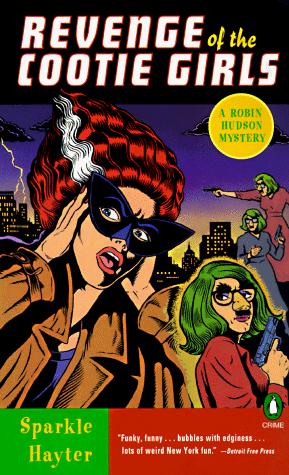
REVENGE OF THE COOTIE GIRLS by Sparkle Hayter

A bizarre Halloween Girls' Night Out in NYC where anything and everything can happen to TV newshound Robin Hudson and her pals. When Robin's intern Kathy, who was supposed to join them on their Halloween jaunt, goes missing, it's up to 'the girls' to find her. A night of mischief and mayhem follows.

This book has to be read to be believed. It is truly hilarious.


DRACULA by Bram Stoker

Okay, now we get serious. A vampire on the move, planning a to turn England into a country of the walking dead, is serious business. I read and reviewed DRACULA a couple of weeks ago and I must admit I loved it. It was creepy, yeah, it was dark and weird and ghoulish and frightening - all of the above - but I couldn't stop reading.

I've said before and I'll say it again, I am SO NOT a fan of vampire books and yet, I seem to have two on my list (the only two strictly vampire books I've ever read - the one with Bela Lugosi doesn't count because he wasn't a REAL vampire.)


ODD THOMAS by Dean Koontz

Yes, you've heard me talk about this book before. Can't help it. It is, to my mind, Dean Koontz's masterpiece. Just brilliant story telling featuring one of the most unforgettable characters you will ever meet. Odd Thomas is a self-effacing short order cook who can see the dead. Because of this, he is a bit reclusive.Wouldn't you be?

This is a book where everything depends on the main character's quiet and oddly charming personality.


THE TAKING by Dean Koontz

The end of our world as only Dean Koontz can envision it. A world-wide alien invasion focuses on a small California town. This has, as in a lot of Koontz's work, a strong female character whom we root for every inch of the way. A macabre tale which turns out to be not exactly what you thought it was.


FOOTSTEPS IN THE DARK by Georgette Heyer

I'm a recent Georgette Heyer convert turned groupie. I love her Regencies - the few I've read anyway. But I'm also smitten with her mysteries. They are of the Agatha Christie school - set in that world - and very well written. They came as somewhat of a surprise to me since I hadn't known Heyer had written mysteries. FOOTSTEPS IN THE DARK is set in an old, run-down but atmospheric, English country house recently inherited by siblings, Peter, Margaret and Elizabeth.

The house comes equipped with tales of ghostly night sightings, not to mention a mysterious cowled figure known as The Monk.

Thanks to Elizabeth Grace Foley for the recommendation. It was a good one!


THE HOUND OF THE BASKERVILLES by Sir Arthur Conan Doyle

I think what is often forgotten in descriptions of this Sherlock Holmes story is just how spooky it is. It's all dark and mysterious and full of inhospitable doings on the grim, gray moor. Perfect for Halloween.


THE YELLOW ROOM by Mary Roberts Rinehart

A Rinehart speciality, mysterious doings in a big old house in the country - this time it's a summer house. Carol Spencer finds a dead body when she arrives to open the house for the summer. With servants refusing to stay (always a problem in Rinehart's world) and dreaded doings at night making her more and more uneasy, Carol begins to fear for her life as she becomes a suspect in the first murder.

If you're not familiar with Mary Roberts Rinehart's books, I say: what are you waiting for?


THE CABINET OF CURIOSITIES by Douglas Preston and Lincoln Child

Third in the Pendergast series and the first one I read a few years ago. Based on this spooky, spine-tingling novel set in a very dark and gloomy NYC, I began reading the rest of the books in the series.

Agent Pendergast is not your typical FBI agent, he is unique in style and operation and seems to be in charge of the FBI's most macabre cases. Scary but manageable.


SUNSHINE by Robin McKinley

The only vampire story I would EVER recommend, besides DRACULA.  This brilliant fantasy take on vampires and ghoulies and many strange things that go bump in the night is set in a sort of alternate universe similar to ours except for the odd assortment of beasties and demons. It is also, despite its dark core, occasionally very funny.

The heroine is Rae 'Sunshine' Seddon, a baker at her step-father's coffee house. The 'hero' is named Constantine. He's a vampire. Forget TWILIGHT, read this instead.

Robin McKinley has a wonderful sense of the absurd and this book shows it. Just wonderful.


NEVER CROSS A VAMPIRE - A Toby Peters Mystery by Stuart Kaminsky

When Hungarian actor, Bela Lugosi, suspects he's being stalked, he turns to L.A. private eye, Toby Peters, for help. It's the mid 1940's, war is raging in Europe and back home in California, movie stars and celebrities keep getting into trouble.

I love this series. It's funny while at the same time there's an actual mystery (with a bit of private-eye noir) to be solved.

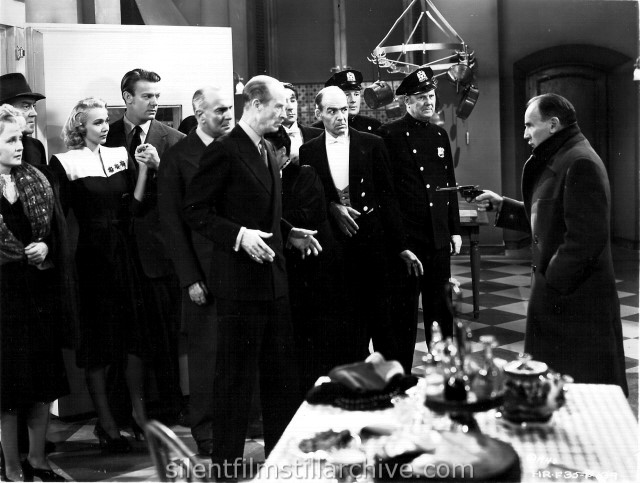
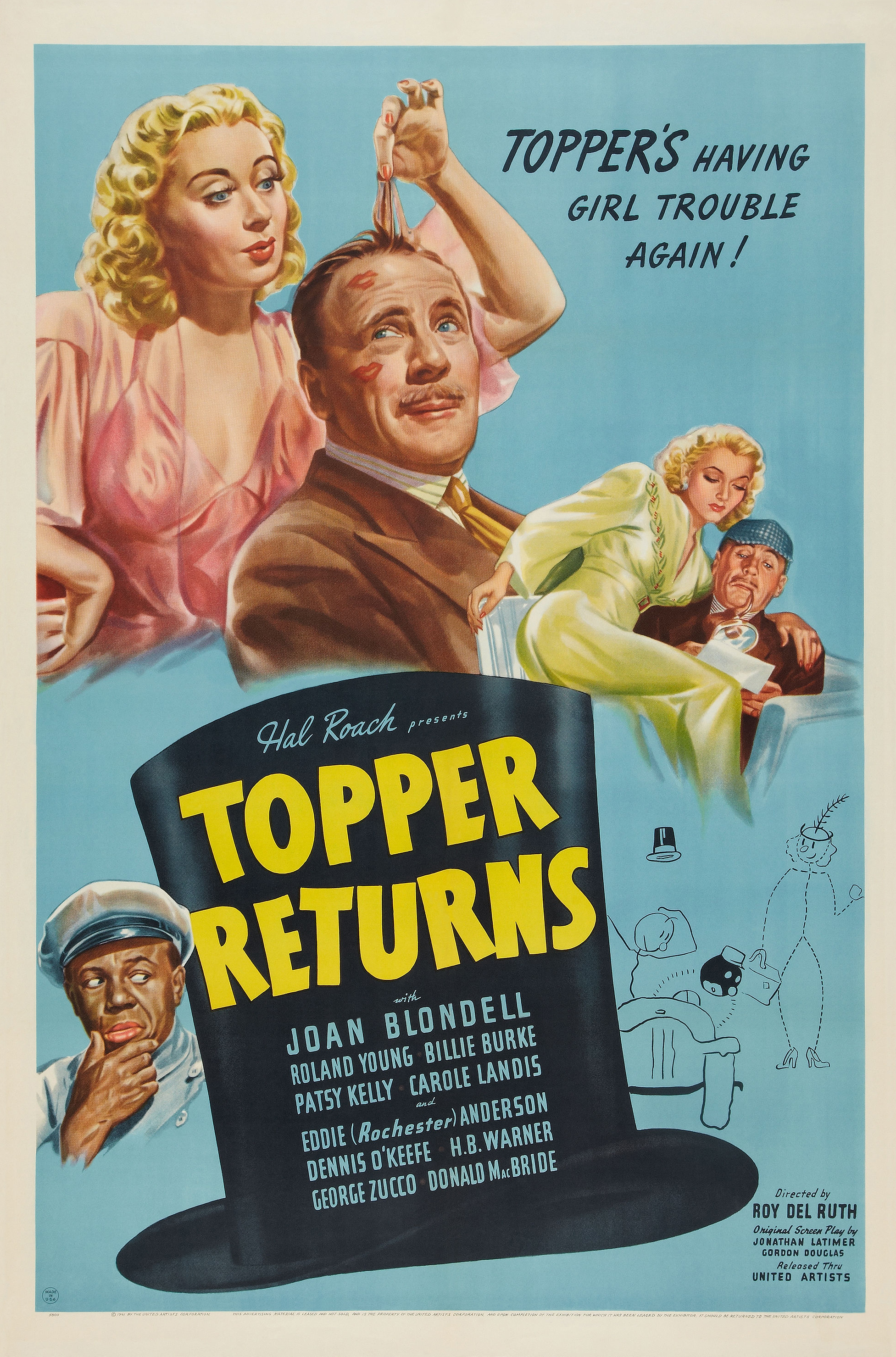
Tuesday's Overlooked (or Forgotten) Films: TOPPER RETURNS (1941) starring Roland Young, Joan Blondell, Carol Landis , Billie Burke and Eddie (Rochester) Anderson


If it's Tuesday, you know it's Overlooked Film Day, a weekly meme hosted by Todd Mason over at his blog, SWEET FREEDOM. Don't forget to check in later and see what other overlooked films other bloggers are posting about today.

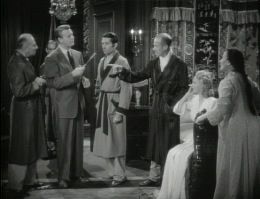
I purposely picked this entry in the Topper series (TOPPER and TOPPER TAKES A TRIP), because, if I'm remembering correctly, it's the only one with a mysterious shadowy killer lurking in the dark - perfect for Halloween viewing. If you want to laugh, that is. I love a good mystery with laughs myself.

Directed by Roy Del Ruth, TOPPER RETURNS is a nonsensical hoot of a movie with very little logic but plenty of screwball action.

No Cary Grant in this one, but the shadowy killer draped in black from head to toe makes up for it (creeping about in a honeycomb of secret passageways on an old estate).


Joan Blondell and Roland Young.

Roland Young is back as Cosmo Topper, the perpetually befuddled banker with the gleam of something or other lurking in his eyes. There was always a hint of smarminess in Roland Young, perfect for the part of the hapless Topper who is always getting involved with beautiful ghosts.


Billie Burke and Patsy Kelly.

Billie Burke is back as well, as Topper's lovable but ditzy wife. In this movie, she comes close to being incoherent, indifferent to anything but the idea that Topper might be casting his roving eye on Joan Blondell whom she first sees in Topper's snazzy convertible, sitting on his lap. Of course, there's a perfectly logical explanation (sort of) to this, but Topper never really explains anything and even if he did, Mrs. Topper is too fixated to believe him.

Billie Burke made a speciality of these types of roles probably because she was wonderful in them.

Eddie (Rochester) Anderson

Eddie (Rochester) Anderson stars as Topper's beleaguered chauffeur Edwin or Edward - anyway - he's known as Eddie. Now we all know Anderson had his own particular comedy schtick which he did for years on The Jack Benny Program, and he continues it here as Topper's much put-upon chauffeur. (There's even a Jack Benny joke/reference near the end.)

Wearing a raccoon coat for most of the movie, Anderson has several truly funny moments which, even after seeing the film more than once, always make me laugh out loud. The odd thing is, I never found Mantan Moreland (who had a similar schtick) very funny except when he played with the East Side Kids (Feet don't fail me now!), NEVER when he played later in the Charlie Chan movies. He was just an encumbrance then.

And Stepin Fetchit makes me cringe. He ruins CHARLIE CHAN IN EGYPT for me. One of the more dreadful stereotypes in films, unfortunately.

But Eddie Anderson, despite his being the chauffeur - the usual part for black actors in those days was as a servant of some kind - has such a gleam of skepticism in his eyes, as if he can't believe white people can be so ridiculous - that he rises above stereotype. He is delightful even when he's being afraid of ghosts. You're not laughing at him, you're laughing with him.


Joan Blondell is terrific and perfectly cast as the smart-alecky best friend to heiress Carol Landis. Joan plays Gail Richards, a girl along for the ride as she accompanies her best friend Ann Carrington (Landis) back home from Singapore (I think) where they've both been doing who knows what.

Blondell is made to order for slapstick, wise-cracks and double-entendres, all of which abound in TOPPER RETURNS.


Carol Landis

Ann Carrington is going home to meet her father for the first time since she was a baby AND to inherit - the day after when she turns 21 - a huge fortune left to her by her late mother. Uh-oh.

Carole Landis is given nothing much to do in the movie but look beautiful, scream a lot and faint. That's the extent of the role. Joan Blondell has all the fun.

Dennis O'Keefe shows up as a cab driver who later becomes Ann Carrington's love interest, but he doesn't have very much to do either. It's not their movie.

George Zucco is in this movie too, as Carrington's doctor, but he hasn't much to do either EXCEPT look sinister and flash his mesmerizing eyes about. Zucco could always add a ghoulishly intense presence to any scene he was in. So, in effect, he's in there as scenery.

The usually funny Patsy Kelly plays Emily, Mrs. Carrington's worried maid, but really, she's not given much dialogue or much to do either.

Lots of wasted talent in this film, but what's left, thankfully, is funny enough.


*****************************

Here's the plot:

Ann Carrington arrives from abroad to claim her inheritance and meet her father, Henry Carrington (H.B. Warner) who, really, looks old enough to be her grandfather. They aged differently back then. Topper (Roland Young) is supposed to be 46 yet he looks to be in his fifties.

Carole Landis, Dennis O'Keefe and Joan Blondell.

From the getgo someone is out to get her. Evidence: a sinister shadowy figure shoots out the tire of their cab while the girls are traveling to the Carrington estate. The cab is almost plunged off a cliff, but not quite.

We know from the first that Gail and Ann are in danger. And oh by the way, the opening credits are too, too MUCH! They feature the shadow of a caped figure skulking about - just perfect. It puts you in the mood immediately.


When Ann and Gail finally arrive, having been picked up on the road by Topper and Eddie on their drive home (they live next door to the Carrington estate),  they are met at the palatial but forbidding house by a butler and the requisite sinister housekeeper (sorry to keep using that word, 'sinister' but can't think of a better one). In one scene, Joan Blondell calls the housekeeper 'Rebecca'.  Get it?


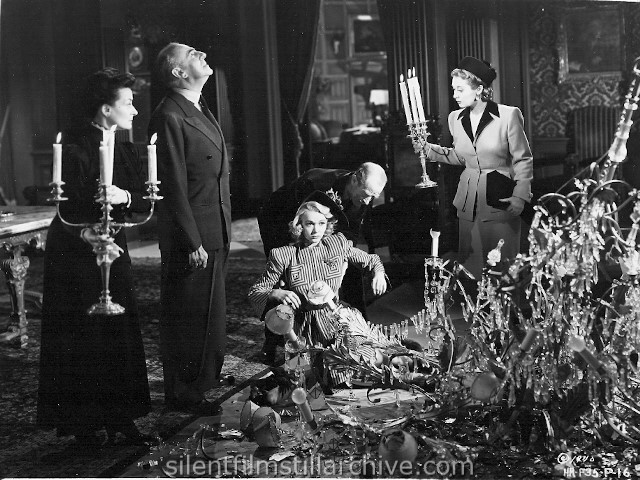
When almost immediately another attempt is made on Ann's life (an enormous chandelier crashes down on her ala Phantom of the Opera), one can guess that something is afoot.

Later that night Gail and Ann exchange rooms because Gail's has Chinese wallpaper and furniture and she claims to have had enough of that where they came from - plus she love Ann's room and Ann, milquetoast that she is, doesn't seem to care one way or the other. So Ann sleeps in Gail's room and Gail sleeps in Ann's fluffy, ruffled organza. girly-girl suite overlooking the ocean.

Yup, you got it.

In the middle of the night, in that dark, dark room, a secret passageway opens (behind Ann's dressing table) and a shadowy black figure enters. He kills Gail when she gets out of bed to close the window.

Gail's incorporeal ghostly self rises from the dead body of corporal Gail and for, whatever reason, decides to head for Topper's house to ask for his help. She takes the short route through the window.


Once there, she surprises Topper, who hasn't heard the last of it from Mrs. Topper (she spotted Gail sitting on his lap when his car whizzed by the house on the way to Carrington's), who is unaware that a ghostly presence is lurking in her husband's bedroom. Gail wants a very reluctant Topper to go next door and investigate what happened to her. A bit of blackmail is called for and soon, Gail has Topper under her ectoplastic thumb.


So, in the middle of the night, Topper and Eddie and the ghost of Gail head on back to the Carrington estate to see who did what to whom.


What follows is screwball with a Capital S once everyone who lives in the house is awakened and Topper tells them that Gail has been murdered.


Unfortunately by then, the body's disappeared and no one believes Topper and by the way what on earth is he doing in their house at this time of night?

In the meantime, Eddie, frightened by Gail's ghostly footsteps in the snow (?!), has hightailed it back to Topper's house. Though there's no snow anywhere else in the entire movie.


Once there, Mrs. Topper discovers Topper missing and decides she wants to head on over to the Carrington estate with her maid, Emily, in tow. Eddie must drive them back - reluctantly.

When Mrs. T shows up at the Carrington estate, there's a virtual mob stumbling around the house, especially once the cab driver, Bob (Dennis O'Keefe) shows up wanting to be paid for his earlier trip but stays, instead, to help the heiress in a jam.

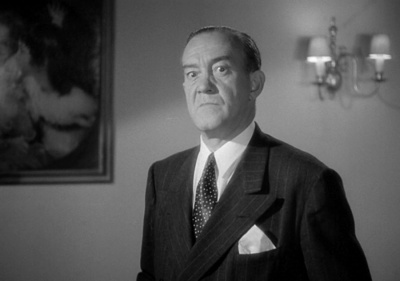
Donald MacBride

The cops show up. Well, two patrolmen and a detective, Sgt. Roberts (Donald MacBride - an actor born to play cops) who are just as ditzy as Mrs. T. They immediately fasten on Topper as the culprit.


Then everyone gets locked in a freezer, including the cops.


With all these people storming around, the shadowy figure still has his moments of lurking about in the secret passageways riddling the house. Eventually he sneaks in and grabs Ann.


He drags her down to the caves beneath the house. There's even a secret boat dock, complete with boats, gates and henchmen. Very convenient.


Upstairs, there's also a chair rigged to collapse backwards when someone sits in it. It sends the occupant tumbling far below into the water. It's the quick way to get to the boat dock,

A totally fun house to live in.

When the killer is revealed there's a bit of a surprise if you're so inclined. But by the end you won't care. The whole thing is a carnival ride of a move - including car chases and encounters (by Eddie the chauffeur) with a fun-loving seal in an underground cave. The usual.


View the trailer, here. The movie is available for streaming on Netflix and you can watch the first half of the movie at youtube if you're so inclined. Or, it looks as if you can watch the whole movie over at Internet Movie Database. Link. 

Monday, October 24, 2011

Monday Review: MANHATTAN WHEN I WAS YOUNG by Mary Cantwell (1995)


This will be a weird review because I've injected myself into the proceedings. More than usual, I mean.

MANHATTAN WHEN I WAS YOUNG is a journal of self-discovery by Mary Cantwell who was, for sixteen years,  a member of the NY Times Editorial Board. But previous to that, she'd toiled at Mademoiselle and Vogue. She also wrote several books.

I was attracted to her memoir because of the evocative title and because Cantwell and I had a few things in common, the main one being our love of NYC.

I grew up in Manhattan and was a young woman in the sixties, but I consider the fifties my formative years. Mary Cantwell, the author of MANHATTAN WHEN I WAS YOUNG,  arrived in New York from Providence, Rhode Island in the early fifties, fresh-faced and tremulous, with just 80 bucks in her purse.  She arrived, as millions of young women did (and do), to work and make a life for herself though she hardly knew what that life should be.

Like many girls of that era, she was intrigued by Sylvia Plath, was dating a boy she'd met in college and had hopes of some sort of vague career squeezed in around marriage.

Cantwell and a friend found a tiny apartment in Greenwich Village and she promptly got a job at Mademoiselle Magazine, though it was the job at the Metropolitan Museum of Art she really wanted.

The job at the Met - working on the museum bulletin, I think it was - was the one I wanted. There I would improve my mind, which the young man who was half the reason I was in New York was very anxious to have me do. "How can you read this stuff when you could be reading Virginia Woolf?" he would say when he saw me with yet another John Dickson Carr. "God! You haven't even read Tristram Shandy."

(I'd pick John Dickson Carr over Tristram Shandy anyday. Score one for Mary.)

Cantwell wanted to do something with her English Major, "...but what, besides teach, can one do with Chaucer?"

The idea I've always had of NYC in the fifties being a playground for me and my friends makes a lot of sense in retrospect. Well, I survived it and so did my friends. But here's the thing: Mary Cantwell survived too. She was fortunate. By her own admission, she was incredibly insecure and naive. If the city had been truly dangerous, she would have been devoured. She seemed that ill-prepared. No street smarts to speak of. Yet, in some strange way, despite her protestations to the contrary, she was undaunted. She kept at it.

This unflinching memoir, written in a matter of fact way, of course, reveals Mary Cantwell's personal life, her eventual marriage and even the final, cold dissolution of that marriage - painful to read. Divorce. Another thing Mary Cantwell and I had in common.

While reading and getting to know the young man who would become her husband in these pages, I kept thinking, she should never marry him - it was that obvious. But she did (she was actually grateful that he kept trying to change her) and at least, she had children who enriched her life. The last few pages detailing the demise of her marriage are incredibly sad.

At Mademoiselle Magazine, Mary Cantwell  came more and more in contact with the quirky members of MLLE's staff, for instance: famed columnist Leo Lerman whose column I read for years back then when I subscribed to Mademoiselle (and Glamour).  I always thought the girls in those pages led such charmed lives. Lerman knew everyone who was anyone and wrote about their comings and goings monthly.

Leo Lerman, the entertainment editor, sat in a sort of railed-off den behind an enormous mahogany desk, taking phone calls from Marlene Dietrich and  Truman Capote.  A plump bearded man, he lived in a house so assertively Victorian it defied the century, which was the point, and had a collection of friends so dazzling I am still dazzled by it. I knew about them only by heresay, however, from the acolytes who clustered about his desk and giggled over his every word.

These magazines were much different then than they are today. They had more influence. They were glossy fashion and life advice bibles, printed on beautiful paper and put together by talented writers, artists, photographers and designers who devoted themselves to putting out a great product every month. The pages were healthy with advertising. Sex was hinted at, but never  displayed front and center. The thick college issue alone, was worth the price of a subscription.

Oh, how I envied the girls in those pages They seemed like creatures from another world.Though I too lived in Manhattan, my life was far from glossy and never would be.

Those girls in MLLE wore twin-sets and pearls and little circle pins. They wore penny loafers. They had long smooth hair which did what it was told to do. They knew all sorts of things I'd never know. Elusive things that would remain forever mysterious to me. They were college grads!

While reading Mary Cantwell's story, I realized that she too felt as unsophisticated, as untutored by life.  She thought the people she met were more interesting, more exotic, more knowing. It's a very inhibiting thing. Something else she and I had in common.

Mary Cantwell's first job at MLLE reminded me of my job at Cosmopolitan in the early sixties. Though our duties were a bit different. Still, she and I worked in the fashion biz. Her career went much MUCH further than mine - she became an editor and author, while I quit after a couple of years to work freelance at home. Mary Cantwell hung in there, she found her niche. She became a somebody. Though I'm not sure she ever felt like somebody.

*****************************

As a young woman freshly arrived in the city, Mary Cantwell had been afraid her boyfriend might be a communist.  In an era when the Rosenbergs were brought to trial and eventually convicted and executed, she had an unreasoning fear that the same thing might happen to him. He was Jewish, too. She really did worry about it.

When I was 19, I dated a guy who was around 30 at the time - if my mother had known how old he was she'd have had a conniption- anyway, I learned that my date had communist sympathies. He had a picture of Lenin in his bedroom. (I was only in there long enough to drop my coat during a party.)

Of course, that added even more exotic allure to someone who appeared to be a man of the world. In truth he turned out to be a double-dealing dolt. I found out he was dating the sister of a good friend and she had marriage plans So, what was he doing with me?

I dumped him. He was too old for me anyway.

*******************************

I admit that as much as I got caught up in Mary Cantwell's life, her work, her colorful travels to Europe, my main interest still, was the city I knew so well once upon a time. A Manhattan I miss to this day:

After school snacks at Woolworth's. They had the best soft ice cream sundaes served in tall soda glasses. It was really just vanilla ice cream and strawberry syrup, but I've never tasted anything better. We also ate at the Automat - the place where I was first introduced to peanut butter and raisin sandwiches.

The Automat was a magically efficient place where each individual portion of food was kept behind glass doors trimmed in shiny yellow brass. You dropped nickles into the slot and the little rectangular doors would open and you reached for your pie or sandwich or beans or whatever. They made the best macaroni and cheese, bar none.

Later it was Schrafft's. I still remember the darkly panelled look of those homey, comforting restaurants. The pleasant waitresses. Schraffts.

I shopped at Gimbels or Macy's or Ohrbachs. Right across the street from the oh-so-exotic (to me, at least), Bloomingdales was a large store devoted to the sorts of prices Marshalls and maybe Wal-Mart have now. It was called Alexanders (I shopped there too), and once while I was working at Cosmo, Helen Gurley Brown (the editor in chief) spotted my outfit, liked it, and asked me who  the designer was. I said, smugly, "Alexander's basement."

One evening we all went to a party in Sutton Place at a magnificent duplex owned by the family that owned Alexander's. Those were fun perks. Especially for a girl from the lower east side of Manhattan.

Were the women who worked on fashion magazines like Vogue in the late fifties crazier than the ones who work on them today?  (Mademoiselle, but for its fashion editors, attracted more bookish types, the kind who later staffed publishing houses.) Or is it that I, small-town and shy, saw anyone whose sophistication exceeded mine as exotic?...The late fifties at Vogue, and presumably Bazaar, represented the madwoman's last hurrah.

Remember FUNNY FACE with Fred Astaire, Audrey Hepburn? Kay Thompson was perfection as the ultra sophisticated fashion magazine editor. I thought of her immediately when I read the above paragraph. "The madwoman's last hurrah."

Also thought about THE DEVIL WEARS PRADA, another fashion business oriented film starring Meryl Streep as a calm, cool, sophistiated, perfectly dressed ogre. Not any less 'crazy' than the women in the fifties who ran the fashion mags. So, I suppose it's a permanent part of the biz.

"Would you look at those buttons!" screeches the fabric editor, whose hair is a kind of Seven Sisters pageboy (though she herself dropped out of someplace on Long Island) moored with a silver barrette. "Those buttons are impossible!"

..."Well", one or two or three of us say, because this is the prescribed response to the ghastly, "it's a look."

*******************************

Mary Cantwell developed a life-long love affair with Greenwich Village. While married and with small children, the idea of having to move to larger quarters on, say, the the upper West Side was unthinkable . They were 'Villagers.' They  had become Villagers.

She loved Greenwich Village (in the same way I do, though I never lived there), or what she imagined the Village to be. Anyone who knows the Village knows that back then, it was a place of invention.

What do I know of these rooms, some of which are shuttered? Nothing, really, only that they are spare and clean and that they have wide floorboards and small fireplaces. These are the rooms in which I have always wanted to live, the material equivalent of Jane Austen's prose, and that they once existed in the Greenwich Village is reason enough for me to believe that some of them still do.

Cantwell became Managing Editor at MLLE, she also worked for Vogue. She was a member of the NY Times Editorial Board and died in 2000 at the age of 69.

Saturday, October 22, 2011

Saturday Salon: A Favorite Painting or Two....or Three!


Martin Johnson Heade (1819 - 1904) was an American painter born in Lumberville, Pennsylvania. He received minimal training, but when young he was taught by the folk artist, Edward Hicks. Heade first exhibited his work in 1841 at the Pennsylvania Academy of Fine Arts, but it wasn't until 1848 that he began exhibiting regularly. He traveled to Europe and, according to Wikipedia, became a sort of itinerant artist.

Later, he developed an interest in  landscapes and around 1859, was living in New York, having taken up residence at the Tenth Street Studio building where many artists of the Hudson River School lived. Among them: Albert Bierstadt and Frederic Edwin Church.

Despite the influence Church and other Hudson River School artists had on Heade, some art historians are not precisely sure that he should be categorized as a member of that group.

Heade traveled extensively in South America as evidenced in his paintings of lush overgrown landscape, orchids and exotic species of birds.

He eventually married and settled in St. Augustine, Florida where he lived until his death.

There's something elusive about Martin Johnson Heade's work. His paintings are moody and maybe even other-worldly. It's the tone, possibly the subject matter, the combo of colors. These are paintings that have a sense of awe about them - especially the landscapes - while at the same time they exhibit a tendency to make the viewer uneasy. 

To learn more about Martin Johnson Heade, please use this link. And this one.

To see more of his work, please check this link.
Martin Johnson Heade