Saturday, November 5, 2011

Saturday Salon: A Favorite Painting or Two...or Three...!

In My Gondola

Girl from Dalecarlia, knitting.

In the Twilight.

Ols Maria

The Mora Fair

Mona

Portrait of Elizabeth Sherman Cameron

Mrs. Bacon

Mrs. Eben Richards

King Gustave V

A Kitchen Maid

Woman In A Forest

Woman dressing.

Mrs. Isabella Stewart Gardner in Venice.

Anders Zorn (1860 - 1920) was a  famed Swedish painter, sculptor and print maker. When I spotted that gondolier's red collar (the first painting) - I knew I had come across something special.

Zorn was born in Mora, Sweden, in the hamlet of Yvraden and was raised on his grandparents' farm. At the age of fifteen (1875),  he began study at the Royal Swedish Academy of Arts in Stockholm, where he trained for five years.

He travelled extensively throughout Europe and to the United States. His early work was in water color but he later switched to oils. He was very adept at the use of negative space and as you can see he could handle realism as well as, later, work in the Impressionist style.

While I love all the paintings in my post, I have to say that the one of Mrs. Isabella Stewart Gardner just dazzles.

Zorn was skilled in portraiture (he painted several American Presidents) but also became famous for his nudes, sculpture and etchings. To learn more about Anders Zorn, please use this link. 

Anders Zorn - Self Portrait

Friday, November 4, 2011

If you're in a Charlie Chan mood...

Warner Oland as Charlie Chan.

In case you didn't know - several of the Charlie Chan films are currently available for viewing on youtube. How cool is that? The entire movie, not just a clip. I couldn't believe it myself, but it's true. I've been having my own Charlie Chan Marathon for a couple of days. Feel free to join me.

Handy-dandy links below:

Charlie Chan at Monte Carlo

Charlie Chan in London

Charlie Chan's Secret

Charlie Chan at the Olympics

Charlie Chan at the Opera

These all star Warner Oland as Charlie Chan and Keye Luke as his son. 

5 From the Library


Some of the books I'd been looking forward to reading this Fall are in at the local library no more. They're at home, in my clutches. Finally!

(I have a few more on hold and am waiting patiently for my turn.)


1) The Dog Who Knew Too Much by Spencer Quinn

I wouldn't miss this for the world. The next entry in the saga of Chet and Bernie. Faded private eye and his caring dog. No cutesy-poo, just terrific writing.


2) I'm Half-Sick of Shadows by Alan Bradley

The next book in the Flavia de Luce series featuring a 12 year old prodigy/crime-solver turned loose in the 1950's English countryside. A mystery genre breath of fresh air.


3) A Paradise For Fools by Nicholas Kilmer

Fred Taylor is back, and I've got him. He and Boston Brahmin art collector Clayton Reed get involved in another art related murder.


4) Misery Bay by Steve Hamilton

The melancholy private detective Alex McKnight returns. Hunting for a ruthless killer in the upper reaches of the ice cold Michigan Peninsula.


5) Ghost Hero by S.J. Rozan

The very latest in the Bill Smith and Lydia Chin private eye mysteries based in Manhattan. If this one is anything like Rozan's last few books, it will be fabulous.

Foreign Film Poster Friday


Vendredi Affiche du film etranger.

Emily over at  THE SILVER SCREEN AFFAIR, thought of it first. I picked the idea up from her.

I was looking for something film related to do on Fridays et VOILA!

Friday's Forgotten Books: FIRST COME, FIRST KILL (1962) by Richard and Frances Lockridge


Friday's Forgotten Books is the weekly meme hosted by Patti Abbott at PATTINASE. Don't forget to head on over to Patti's blog to see what other forgotten books other bloggers are posting about today. Here's the link.

FIRST COME, FIRST KILL is not a Mr. and Mrs. North book, in case you were wondering when you saw the Lockridge name. Instead this is my first Captain Heimrich mystery authored by the husband and wife writing team, Frances and Richard Lockridge, who created the more famous series featuring Manhattan sleuthing duo, Pam and Jerry North.

Merton Heimrich is an upstate New York Police Captain, married and the father of a small son, Michael, whom both Merton and his wife Susan, refer to as 'the boy'. The boy is the 'owner' of a huge Great Dane named Colonel. The dog has lots to do with the mystery in FIRST COME, FIRST KILL, primarily because of his curiosity, and his doggy talents for sniffing and scratching.

Though once upon a time I read all the Mr. and Mrs. North books I could get my hands on, they now seem dated to me. (At least the one or two I've read within the last couple of years.) The Heimrich book seems fresher to me.

This is a fairly simple case of murder in which the cover-up and the unexpected identity of the victim, obfuscate the obviousness. Mistaken identity comes into it as well as well one of my favorite mystery gimmicks: dying last words. In this case, the last words of an old handyman who drops dead from a rifle shot in the Heimrich's driveway, in full view of Susan Heimrich and Colonel, waiting for the school bus to drop off 'the boy'.

A fairly low key, though very enjoyable mystery even if I figured out who did what to whom about halfway through. If I find anymore Captain Heimrich books, I'll be reading them.

I first heard about the Heimrich books by reading a review on one the blogs I frequent but damn if I can remember where. I apologize for that.

Thursday, November 3, 2011

Ten Foody Books From My Own Kitchen Shelves For Reading in Bed or Elsewhere.


I'm a newly indoctrinated fan of BOOK RIOT, a website which features booky posts for those of us for whom reading books themselves just isn't enough - we must know what goes on in the world of books as well. Book Riot is definitely one of the best places to go for all things literary

This morning I happened upon a post titled, READING COOKBOOKS IN BED and I smiled - aha!

Why? Well, because I though I was the only one who did this. Reading cookbooks in bed, I mean. But also because I'd been working on a post outlining my favorite cookbooks - books that are on my kitchen bookshelves when they aren't being read in bed or elsewhere.

I do keep my cookbooks in the kitchen book case, but they don't, necessarily, remain there. I occasionally take one to bed with me for the same reasons that Jeff O'Neal talks about in his post. (I love his book suggestions too.)

But my own cookbooks are not as pristene as Jeff's. When I'm following a recipe in the kitchen, things tend to fly about.

I sorted through my cookbooks and other food related tomes and came up with a List of Ten. After all, November is the month when food suddenly (or not) becomes a primary concern. I think it's that 'gearing up for winter, gathering of the acorns' imperative. .

********************

Ten Foody Books From My Own Kitchen Shelves:


1) The Italian Cooking Encyclopedia by Linda Frazier

This is my very favorite Italian cookbook, primarily because each recipe is accompanied by fabulous photos. It is simply a gorgeous book. The recipes aren't bad either. This is the authoritative guide to Italy's different regions and cuisines. If you, like me, love Italian food, then this book must be in your collection.


2) Mary Emmerling's American Country Cooking

Just exactly what it sounds like. Another gorgeous book devoted to food and the stylings of the table. There isn't a recipe in here you won't want to try, including barbecue. Designer and collector Mary Emmerling, traveled from Maine to California and in between, to put together this inspiring collection of menus, recipes and photos.


3) Home Cooking by Laurie Colwin

This is the sort of book you pick up, sit down with and before you know it, you've read the whole thing. Colwin's wonderful stories about food, life and the occasional recipe are just perfection.


4) More Home Cooking by Laurie Colwin

Colwin continues her joyful stories about food, writing and life. When I finished this book I went looking for more, and that's when I learned that Laurie Colwin had passed away. Untimely, to say the least.

Laurie Colwin

I was especially saddened because after reading these two books I'd felt as though I'd known her. I felt as if a friend had died. Luckily, she left these very special books behind for us.


5) A Proper Breakfast by Alexandra Parsons

Food and art - what could be better? Recipes for a perfect breakfast, from different regions of the world. The illustrations by Eve Safarewicz are absolutely exquisite. She details not only the food, but the tableware and linens. Just looking through this book makes me smile. It is such a special treat.


6) Tea by Tricia Foley

Designer Tricia Foley has fabulous taste as we all know, so when she turns her talents to the afternoon (or morning or evening) tea ceremony, the results are beatutiful. Tea indoors before a fireplace or on a sunny front porch or on a picnic in the country. All beautifully photographed with just the proper, often fanciful, accoutrements. A book to savor.


7) The Pleasures of Tea by the editors of Victoria Magazine

Victoria Magazine was, once upon a time, my monthly design comforter. I loved the photos, the stylings, the poetry and the general ambience. It really was my favorite magazine for many years.

At any rate, the cover of this book gives you an idea of what I loved about Victoria and continue to love about their books. This particular one has gorgeous comfy photos - tea for every occasion. Lovely stuff.


8) The New Moosewood Cookbook by Mollie Katzen

If you love vegetarian food and I do, then this is the book for you.  The recipes are terrific and mostly simple enough. The text of the book appears hand lettered and the charming drawings are anything but slick. Just a book devoted to fabulous and healthful vegetarian food.


9) Brunetti's Cookbook by Donna Leon, with recipes by Roberta Pianaro

A trip to Venice to eat the best Italy has to offer in the company of mystery author Donna Leon, creator of the Commissario Brunnetti mysteries. What could be better? And you don't even have to leave your own bed.


10) American Family Style - Decorating, Cooking, Gardening and Entertaining by Mary Randolph Carter

Yeah I keep this book in the kitchen for inspiration. Mary Randolph Carter is a designer/stylist  and guiding creative light at Ralph Lauren.


Mary's fabulous office and Mary's website.

Note: Woodcut illustration at the top of the post is by Mary Azarian.

Wednesday, November 2, 2011

Five Favorite Mystery Series +

Crackers in Bed by Norman Rockwell.

Are you a series reader?

These days it's hard to get away from series since every publisher seems to favor them - the better to get return readers, I suppose.  Also, trilogies appear to be making a comeback - if they ever left the scene.

Well, I'm a series reader from way back so I'm all for it.

But the problem is, to my way of thinking, that some books are best left as stand-alones. There are characters and stories not really meant to continue, book after book. Also, not every author has a series in her. I'm never for forcing the issue.

Then too, some series just get weighed down after awhile, they become tired. Spent. It's obvious the author can't think up anything else to do with the characters. Time to call it quits. Easier said then done, I suppose.

Series are more popular than ever.

I'm pleased.

But what about you? Is this a happy trend?

************************

5 Favorite Mystery and/or Thriller Book Series:


1) The Sherlock Holmes and Watson stories, by Sir Arthur Conan Doyle.

Well, of course. These are timeless books to which we return again and again. 221-B Baker Street will always be a very special address. The allure of these stories has been theorized about and dissected many times. I won't do it here. It's enough to know that Holmes and Watson live forever.

The first Hercule Poirot story.

2) The Hercule Poirot and Jane Marple series of books by Agatha Christie.

I'm grouping them together because they're written by the same author of course. These books show how genre series should work in the hands of a master. But they are done in a fairly specific way: the main character never really changes much. Thank goodness.

Well, Poirot ages a bit, but not enough to prevent him solving crimes. (Except in the last book.) And Hastings does marry eventually and move to South America - which I always found odd - but then he comes back and everything is all right again. In these stories, Poirot and Jane Marple are the fixed points in their particular worlds.

The first Jane Marple story.

I've often wished that Christie had written a story in which they meet. But perhaps she was wise not to.


3) The Nero Wolfe and Archie Goodwin books by Rex Stout. 

This is another perfect example of a series in which the main characters, the orchid loving genius and his wise-cracking alter ego, never change, nor do they age. In fact, it is essential that they NOT change. Again, they are fixed points.

That is part of their attraction, I think. No matter what, you know you can go visit the brownstone on 35th Street and all will be the same. It's only the mysteries that are brought to Wolfe's door that continue to change. It all works remarkably well. Possibly because Stout was a genius.


The first Elvis Cole and Joe Pike story.

4) The Elvis Cole and Joe Pike books by Robert Crais.

My first encounter with a non-vintage L.A. private detective was, thankfully, luckily, with Elvis Cole - the world's greatest detective. (At least according to Elvis.)

I was never one for the L.A. lifestyle, I much prefer books set in NYC or Boston, but Robert Crais, Elvis Cole and Joe Pike soon changed my mind. These characters remain unchanged as well, though Elvis does, eventually, fall in love. But even that doesn't change him much. He's not going anywhere. He'll be there in that little A-frame California hill house forever. I hope.

Joe Pike, Elvis's silent, enigmatic and very dangerous partner does get a series of his own. But Elvis appears in that as well. It's just that those books are told from Joe's point of view.

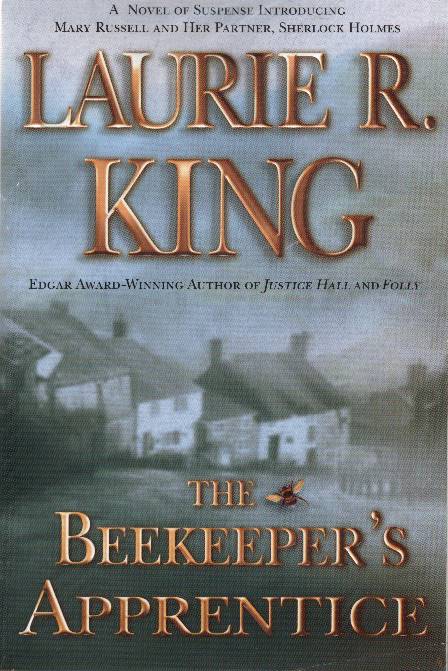
The first Mary Russell and Sherlock Holmes book.

5) The Mary Russell and Sherlock Holmes books by Laurie R. King.

Here Holmes is not so much a fixed point. Nor is Watson - he has aged and is not really much of a part of King's series. Instead it's the Holmes of old but with a new side-kick, an apprentice who happens to be a young woman. Mary Russell tells these stories (with a few rare exceptions) in the first person, from her point of view. 

Russell is just brilliant enough, just fussy enough, just eccentric enough to suit Holmes. This is an exceptionally inventive series. Especially so in the early books.


 Honorable Mentions:

The Roderick Allyn books by Ngaio Marsh -- Scotland Yard

The Lew Archer books by Ross MacDonald - L.A. Detective

The Jack Reacher books by Lee Child - Ex- Army M.P./Modern day knight in shining armor.

The Amelia Peabody books by Elizabeth Peters - Victorian Egyptologists - humorous

The Inspector Appleby books by Michael Innes - Scotland Yard - Literate.

The Spenser books by Robert Parker - Boston Private Detective

The Richard Jury books by Martha Grimes - Scotland Yard - Literate.

The Thursday Next books by Jasper Fforde - Literary Detective - Fantasy - Very literate and wickedly humorous.

The Flavia de Luce books by Alan Bradley - Young prodigy as detective - 1950's England.

The Chet and Bernie books by Spencer Quinn - Dog and private detective - humorous.

The Stephanie Plum books by Janet Evanovich - Hapless Trenton, NJ bounty hunter - Very humorous.

The Toby Peters books by Stuart Kaminsky - 1940's L.A. Private eye - Very humorous.

The Fred Taylor and Clayton Reed books by Nicholas Kilmer - Boston art dealer and literate henchman.

The Gideon Oliver books by Aaron Elkins - Forensic archaeologist

The Stanley Hastings books by Parnell Hall - NYC detective - Humorous

The William Monk books by Anne Perry - Victorian detective

The Thomas Pitt books by Anne Perry - Victorian policeman

The Maigret books by Georges Simenon - French policeman

The Philip Marlowe books by Raymond Chandler - L.A. Detective

The Rachel Alexander and Dash  books by Carol Lea Benjamin -  NYC Dog trainer and private detective

The Adelia Aguilera books by Ariana Franklin - Historical mystery set in Medieval England.

The Alex McKnight books by Steve Hamilton - Upper Michigan Private Eye - ice cold setting.

...I know I've forgotten a few, but in the meantime, there's plenty of good reading here.

Tuesday, November 1, 2011

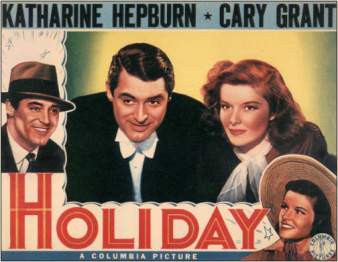
Tuesday's Overlooked (or Forgotten) Movies: HOLIDAY (1938) starring Cary Grant and Katherine Hepburn.


Tuesday means Overlooked Films Day, a weekly meme hosted by Todd Mason at his blog, SWEET FREEDOM. Don't forget to check in and see what other overlooked films other bloggers are posting about today.

I am here to confess that, strangely, I've never seen HOLIDAY, although I was sure I had. Possibly I saw bits of it over the years, just never all the way through. I'm so glad I finally decided it was time to change that. I most especially loved Katherine Hepburn in this. She is superb. Grant's good too, as always, but it's Hepburn who steals the show. She is radiant as the sister (the black sheep in the family) supposed to be 'less than' her steely and 'more' beautiful ice blond sister.


But as Lew Ayres (playing her sad, weak-willed brother, Ned) tells her late in the film: "You're twice as beautiful, ten times the person she is." Or words to that effect, I'm paraphrasing. Of course, he's perfectly right. But these are words that Hepburn's character, Linda Seton, has never heard from anyone in her family. It is a wonderful moment.


By the way, the story takes place over the Christmas to New Year's Holiday so it's a perfect film for this time of year, give or take a few weeks from now.

HOLIDAY, as directed by George Cukor, is  not really a comedy though it has its moments. For me, it's more of a romantic drama with touches of comedy and wit. But at its heart, it is anything but light-hearted.  Cary Grant's character (in a manic sort of way) is trying to dodge the bullet. But that particular bullet is never really defined. It's not enough to say that possessions and money are the root of all evil. Besides, Johnny seems a bit too old not to have decided what he wants to do in life. I had a suspicion while watching his antics that a prescription for Zoloft would have done Johnny a world of good.

I also am leery of men who are still called Johnny though they've obviously at an age when John would be more appropriate. Jeez, I'm sounding like the stiff-necked, icy blond dame when I would much rather be Katherine Hepburn. I mean, who wouldn't?

Here's the plot:

Johnny Case (Cary Grant) is a man newly in love. He thinks he's found the perfect woman in Julia Seton (Doris Nolan), an heiress to millions (though he's unaware of it at the time). They both appear to be impulsive love-at-first-sight types. Ah, but appearances can be so deceiving.


Almost from the first we can see that Julia is all wrong for Johnny, just as he is wrong for her. (He wears a bow tie, for goodness' sake!) But he is besotted. He wants a quick marriage so he and Julia can go off on their own and make their happy life.

Of course, WE know that's not going to happen. Julia is too much daddy's little girl, too much under his restrictive thumb, too much like him - a Wall Street mogul who worships money. As the story develops it's easy enough to see that what Julia wants is someone to manipulate and make into the image of her father. She doesn't realize that Johnny is NOTHING like her father, though he is capable of making a great deal of money. (That part isn't made very clear except that it has something to do with stocks and bonds.)

BUT - Johnny has a plan: once he reaches a certain amount in the bank, he wants to quit work and go on holiday to find himself. Yeah, it's a bit naive and kind of infantile, really, especially in the late 1930's with war on the horizon. But, hey, it's Cary Grant, we'll allow him anything. But still, there's an uneasiness.

When Johnny calls on Julia at home for the first time, he assumes she's a secretary working at this huge mansion in Manhattan - so wrongly has he misread her. But he is soon disabused of this notion. Julia is Miss Ritzy Ritz - she'd simply forgotten to tell him.


The interior of the Seton house looks like an opulent marble mausoleum. It has all the warmth of the Roman Coliseum. Nobody really 'lives' in this house. It's all for show. The only breath of life in that marble cavern is Katherine Hepburn - though she thinks Johnny's the fresh breath of air - once she meets him.

Linda is a poor little rich girl who can't find her place in life. She's older than her sister and still struggling to break free from a domineering father. She's apparently gone about it the wrong way for years. Julia is the apple of her daddy's eye, Linda just the annoying cinder.


But Linda loves her sister and wants her to be happy. She can probably sense that Johnny is the wrong man for Julia, but doesn't really understand it completely until late in the film.


But she almost immediately realizes that Johnny is the happy-go-lucky sort with his own very definite view of the world. He isn't ready to buckle under the strictures of wealth and position.


When, out of her devotion to Julia, Linda decides she wants to give the happy couple a small, private party for their engagement, she begs Linda not to allow the party to be taken over by all the usual hoopla. She wants to plan and carry out the whole thing herself, up in the play room where it's comfy and cozy. "Let me do this for you," pleads Linda.


The playroom, with its fireplace and comfortable chintz sofas looks like something transported from a New England cottage - yet its on the fourth floor of the mansion. The room served as a 'retreat' for Julia's late mother - someone who, like Linda, needed as escape from the cold marble downstairs. It's the room where Linda feels most at home.

But Julia and her father ignore Linda's wishes (as usual) and we get a quick cut from Julia and Linda hugging on the stairs, to a gilded invitation inviting all of  New York society (it seems) to the Seton engagement soiree. It also happens to be New Year's Eve.


Julia refuses to come downstairs and of course, much is made of her absence by the society snoots cavorting among the marble. But soon, the playroom is filled with laughter when Johnny's friends, Professor Potter and his wife - the wonderful Edward Everett Horton and Jean Dixon (who appear to have the kind of easy-going, affectionate marriage all of us dream of) show up and find their way upstairs. Then Ned joins them, drunk as usual.


Johnny proceeds to have a grand time with Linda. They do some sort of acrobatic routine and roll around on the floor laughing. Much to her father's and Julia's dismay when they come upstairs looking for Johnny. This dame has forgotten what it is to have fun. Fun that doesn't have anything to with money, that is.


I think, really, that all this silly physical stuff (Johnny can do a backward flip and a somersault at the drop of a hat and does so when he feels pressured) is meant by the director as as easy way to show up the differences between the sisters - Linda joins in the fun - Julia is indulgent, though increasingly annoyed. It's obvious she wonders when Johnny will grow up. It's also a very visual way to show the differences between up tight society  types and the easy going Johnny and his friends who feel free to indulge their eccentricities.


Julia has no idea what Johnny is. He doesn't care much about making money, he wants to be happy, he wants to enjoy life. Money is just a means to that end. But, Julia says, in a very chilling moment: "There's nothing like the thrill of making money."

My feeling is that Julia has taken the place of the son in her father's eyes. Ned is a weakling who shows up at work at the family firm only because his father insists. He just isn't strong enough to break free. He has talent as a musician, which was (as is made obvious) his true calling, but, Linda explains, "Father soon put a stop to that."

If Seton women worked, Julia would be down at the firm making money for her daddy.


On New Year's Eve, before Johnny gives voice to his doubts, Linda and he dance up in the playroom - just the two of them - and you realize that Linda is in love with him and what's worse, she hates herself for it. When he makes a motion to deepen a friendly kiss, she backs off and sends him downstairs to Julia.


That night Johnny leaves the mansion and disappears for a few days - "...to think things over."

Later there is a quietly powerful scene as Linda finds out how her sister really feels about her. Julia has resented Linda - gone around her ideas or blocked them, whichever was easiest for her and father.

Hepburn is superb as she reels from the news that the love she'd envisioned between herself and her sister simply doesn't exist. She backs into a corner as she'd been physically struck.

But Linda wants what's best for Johnny and if Julia is what he wants, then it's Julia he shall have.

Johnny comes back from a few days away, full of purpose. He's decided to give Julia an ultimatum. He's sailing for Europe with his friends the Potters and wants Julia to run off with him. She says no and Johnny shows up at the mansion to speak to her and her father.

SPOILERS coming up...


When Johnny (capitulating) says, that as a compromise he's decided to work for Seton's firm for two years and then he'll re-evaluate - something Julia had proposed - all seems settled. Then, because he can't help himself, Seton, senior, offers the couple their own townhouse and a staff of servants as a wedding present. Then he maps out their entire European honeymoon down to their sailing schedule. Johnny stands numbly by while Julia is delighted.

But he's had enough. Johnny can see that compromise is impossible. He breaks it off with Julia (FINALLY!) and walks out..


Linda immediately confronts Julia. She (FINALLY!) realizes that Julia doesn't love Johnny - she is incapable of the sort of unencumbered love Johnny was offering. Linda says, "Why, you never loved him. Look at you, you're relieved it's over."  Julia responds, "Of course I'm relieved."


It's another chilling moment really and we breathe a sigh of our own relief at Johnny's fortuitous escape.

Linda decides to go after Johnny on board ship. She tries to get Ned to go with her, sail with them. But Ned simply hasn't the courage.

So Linda rushes down to the boat and she and Johnny sail off together into their happy future.

Yup, Johnny's head over heels.

I think, possibly, this movie isn't as popular as many other Cary Grant films for a very good reason. The film isn't sure what it wants to be. It's not a comedy, it's not totally a drama. It also has some very unpleasant characters. Henry Daniells for one. Hisss....!


Henry Daniell...hisss...!

The director, or maybe it's the script, doesn't quite make Johnny's mania for somersaults and yearning to discover what he was meant to do in life, all that appealing or even, charming.

It's not enough to be against something, you have to have a good reason for it. The Setons, father, daughter and son, are the status quo, that is evident. Julia and her father would have smothered Johnny. No one can blame him for wanting out. But it's not enough to be anti-stuffed shirt or anti-society, or anti-whatever, you have to be FOR something else. What exactly is Johnny for?

In my view, that's the weakness in the film. What exactly is Johnny for?

But, if you don't think about it too much, it's possible to enjoy this film for the wonderful performances, most especially that of Katherine Hepburn, Lew Ayres, Edward Everett Horton and Jean Dixon. Cary Grant is good with a very difficult part.