Showing posts with label Nicholas Kilmer. Show all posts

Monday, October 8, 2012

Art and Murder - Together Again


Actual poster issued by Senator Joseph McCarthy during The Red Scare in the 1950's.It might also have come first from Queen Victoria.

I'm crazy about art mysteries - whether the hero is an artist, a museum curator, an art collector, art historian, restorer or just some guy who wanders into an art gallery and finds a dead body.

If the mystery is well-written and set in the art world, I'll be reading it sooner rather than later. There's just something about art and murder that has always captured my fancy. (Maybe because I have an art background and have to keep from swooning when I enter a museum.)

But not everyone has heard of the art mysteries I love best, so I thought I'd list the cream of the crop and urge you to take a look. (You don't have to be an art maven like me to appreciate a good mystery no matter where it's set - right?)


1) The art historian Jonathan Argyll series by Oxford historian Iain Pears begun in 1990:

First book: THE RAPHAEL AFFAIR which introduces us to the fumbling but endearing British art historian Jonathan Argyll and his future cohorts: the gruff but genial General Bottando and his beautiful associate, Flavia di Stefano, both of the Italian National Art Theft Squad. The books mostly take place in Italy and occasionally in England. All I can say is I Love These Books! They should be read in order if possible.

THE RAPHAEL AFFAIR (1990)
THE TITIAN COMMITTEE (1991)
THE BERNINI BUST (1992)
THE LAST JUDGEMENT (1993)
GIOTTO'S HAND (1994)
DEATH AND RESTORATION (1996)
THE IMMACULATE DECEPTION (2000)
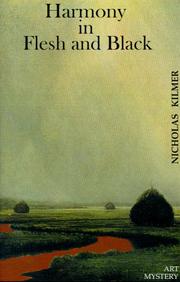


2) The Fred Taylor mysteries by American art historian Nicholas Kilmer begun in 1995:

First Book: HARMONY IN FLESH AND BLACK which introduces us to Vietnam vet Fred Taylor, a hard to define kind of guy except to say he is tough, laconic and an art expert. He is the right hand man of the very eccentric, Boston high society art collector Clayton Reed. Skulduggery is a matter of course as Clayton sends Fred out into the art world to follow up his often inspired hunches. (See my review here.)

HARMONY IN FLESH AND BLACK (1995)
MAN WITH A SQUIRREL (1996)
O SACRED HEAD (1997)
DIRTY LINEN (1999)
LAZARUS ARISE (2001)
MADONNA OF THE APES (2005)
A BUTTERFLY IN FLAME (2010)
A PARADISE FOR FOOLS (2011)

Note: The early hard covers of the first four books had simply splendid covers. While I've read the entire series, the first four books are my favorites.


3) The Chris Norgren mysteries by American writer Aaron Elkins begun in 1987:

First Book: A DECEPTIVE CLARITY which introduces us to the very likable San Francisco museum curator Chris Norgren as he heads to Berlin to help set-up The Plundered Past exhibit which will feature works of art looted by the Nazis during WWII. (See my review here.)

A DECEPTIVE CLARITY (1987)
A GLANCING LIGHT (1991)
OLD SCORES (1993)
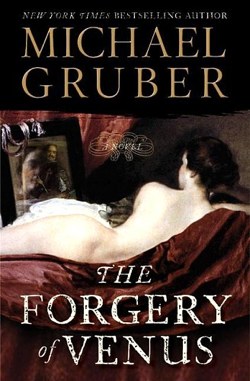


4) Stand-Alone: THE FORGERY OF VENUS (2008) by Michael Gruber
In which the difference between art forgery and artistic art forgery is revealed - more or less. A brilliant book which makes you think about art (and maybe murder) in an eye-opening new way. Is painter Chaz Wilmot mad? You decide.


5) Stand-Alone: LOOT (1999) by Aaron Elkins
My favorite of Elkins' stand-alones and in general one of my favorite books of all time. A re-reader's delight.

A painting - Nazi loot - thought lost forever turns up in a Boston junk shop, followed by murder and the disappearance of the painting yet again.. Ben Revere, ex-art curator begins a quest for the killers which will take him on a danger filled trip to Europe. (Read my review here.)
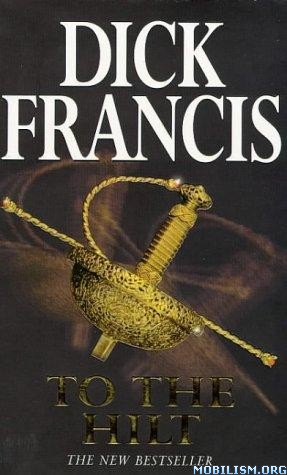


6) Stand-Alone: TO THE HILT (1996) by Dick Francis
My first Dick Francis book, after which I read almost all his books in a great frenzy of discovery. Artist Alexander Kinloch lives an isolated existence in the Scottish Highlands where he paints allegorical paintings of golf courses. (Hey, it all makes perfect sense to me.) When thugs turn up on his doorstep and leave him for dead, he begins an idyll involving friends, family and nasty secrets which takes him to England where he will ask questions nobody wants answered. One of my favorite parts in the book is a moment in time when Alexander describes his painting process in a very luscious way. So damn intriguing.
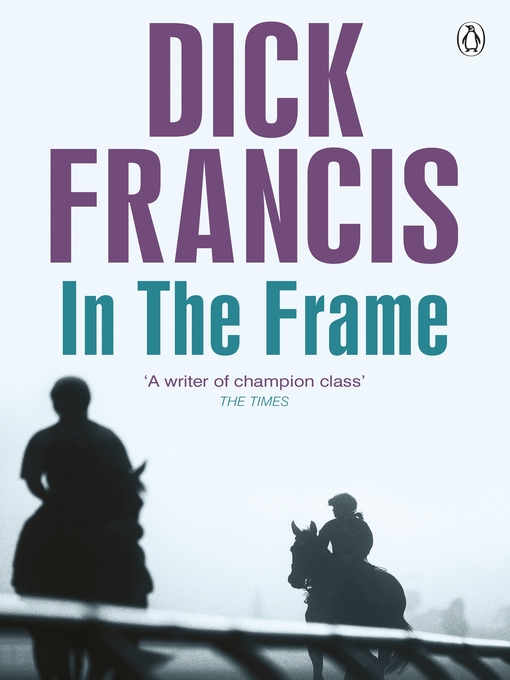


7) Stand-Alone: IN THE FRAME (1976) by Dick Francis
Charles Todd is a well-known English artist who specializes in paintings of horses. When Todd's cousin's house is burglarized and his wife murdered, Todd becomes a suspect and so, of course, he must track down the real killer.

"Few match Francis for dangerous flights of fancy and pure, inventive menace." Boston Herald. Couldn't have said it better myself.


8) Thanks to Les Blatt for reminding me of two of my favorite art mysteries which inexplicably slipped my mind when composing this post earlier. ARTISTS IN CRIME by Ngaio Marsh - the sixth in the Roderick Allyn series by Ngaio Marsh - a dame of the golden age.

How could I forget the book in which Scotland Yard Superintendent Allyn first meets and is smitten by artist Agatha Troy. (He will later marry her.)


9) A CLUTCH OF CONSTABLES by Ngaio Marsh - When Allyn's artist wife Troy goes on a river cruise, murder interrupts the peaceful jaunt. Thanks again Les, for the timely reminder.

*********************


Note:  I might add the Gabriel Allon series by Daniel Silva because the hero is an art restorer - but he is also a part time Mossad agent. Though I've only read a couple of these I've always meant to read more. However, the stories in these books seem to concentrate on spying and the darker aspects of international intrigue than on any art related crimes.

First Book: THE KILL ARTIST (2000)
For the rest of the titles in the series, please use this link.

I heard that there's a book out there which features Leonardo da Vinci in a murder mystery, but I'm a little leery. Besides I can't remember the author or title.


Illustration by the legendary Brad Holland.


Friday, February 25, 2011

Friday's Forgotten Books: HARMONY IN FLESH AND BLACK by Nicholas Kilmer


Author Nicholas Kilmer - an art historian in actuality - writes one of my favorite (and lesser-known) mystery series. It features Boston Brahman art collector Clayton Reed and his art-loving henchman, Fred Taylor. Who knew art collectors needed henchmen? Well, the very eccentric, paranoid and esoterically inclined Clayton Reed definitely does.

HARMONY IN FLESH AND BLACK (1995) is the first in the Reed/Taylor series and a heck of a debut. Kilmer had previously written a memoir about a house in Normandy, but HIFAB was his first fiction attempt. When I first discovered it several years ago, I couldn't help but be thrilled because of my over-fondness for mystery/thrillers set in the art world. There aren't many of them, but the few I've read I've been fortunate to love.

Clayton Reed is the wealthy owner of a Boston townhouse in the famous Beacon Hill district. There he is free to conduct his art collecting and indulge his eccentric lifestyle. Fred Taylor is his business associate and trouble-shooting henchman. He works out of an office in the brownstone when he's not off chasing clues to heretofore undiscovered masterpieces and the mysteries surrounding them. Those mysteries often involve murder and dark doings among the paintbrushes.

Who knew the art world was this violent? Yeah, turns out it's a cutthroat world. The acquisition of paintings in the auction room or elsewhere, is not for the faint of heart.

The stories are told from Fred's point of view. He's a Vietnam vet who owns a house in Boston but doesn't live in it. He allows the house to be used instead, as a rest stop for vets with various problems and lack of funds. Fred currently lives with his sensible librarian girlfriend Molly (a terrific character) and her two kids.

Fred is an enigmatic guy with pesonal connection problems of his own. His understanding and appreciation of fine art is what makes him different from your average tough guy. He is someone who doesn't suffer fools lightly except when he's ferreting out a lost masterpiece. A smart guy who sometimes pretends otherwise and allows his rugged appearance to do most of the talking for him.

"I've come for the painting," Fred said.
Smykal flinched. People often flinched the first time they saw Fred. He was large and had a face that made people remember things they wanted to forget.

In this first book in the series, Fred stumbles over the dead body of a has-been collector just hours after buying an unsigned painting of a nude from him. Fred and Clayton suspect the painting may be that of a major American artist. Once the police are involved, Fred must keep Clay out of the limelight, always keenly aware that Clay doesn't function well under pressure and may say or do something which will put the kibosh on the ultimate prize: the painting.

There are many things I love about these books including the main idea that Fred's basic job, aside from the acquiring of paintings and solving their mysteries, is to keep Clay from being his own worst enemy. These are two terrifically written characters who are not really friends, but who depend on each other for what each of them needs: Clay needs to acquire great art and Fred needs to be around great art. It's an unusual relationship that works.

In the opening paragraphs of HARMONY IN FLESH AND BLACK, author Kilmer offers one of the best descriptions of the art process I've ever read. From these moments on, I was enamored of this series.

The dark-haired woman reaches into the pond to gather lilies, frozen amid slashes of yellow blooming flags, the captured light struggling against cloth, the paint laid out to stretch and dry. That's violence, Fred was thinking. There's nothing innocent about it, nothing safe anywhere in the operation. He looked across the downstairs room he worked in, at the painting he had pulled out of the bins to think about while keeping his mind clear.

Art is violent from its inception. As long as he had worked for the man, Fred had not been able to make Clayton Reed recognize this. It's dangerous, Fred was thinking, not to understand the nature of your opponent, to believe it simply lazy, languid, beautiful, and harmless. It's dangerous to collect and keep it around you, not knowing what it is.

Fred loved pictures, but not the same way Clayton Reed did. Clay acquired them with the enthusiasm of those who collect stamps or rocks or money, as objects they believe have been above the dirty tug of living in the world. For Fred a picture was alive, an animal, something whose design and color had a feral purpose.

This made Fred the hunter, the guide, the beater, out front - with Clayton often hanging back, rising above, perched on his elephant, his rifle ready. These days they were both edgy on account of the big project they were working on, which something, they both knew, could blow out of the water any minute.

Great stuff. A terrific series, too good to be missed.
Link to the fantastic fiction website which has a list of all of Nicholas Kilmer's books.
Link to my own review of Kilmer's latest in the series A BUTTERFLY IN FLAME.
Link to Forgotten Fridays blog contirbutors at PATTINASE (Patti Abbott's blog).

Monday, January 3, 2011

Monday Review: A BUTTERFLY IN FLAME by Nicholas Kilmer

Since the very first book, Harmony in Flesh and Black, I have been a huge fan of this intriguing series by art historian Nicholas Kilmer set within the suspicious hot-house haze of the art world. Clayton Reed, Boston Brahman and collector of art masterworks is the sort of man of whom it can easily be said that 'refined' is not too refined a description. From his thick shock of restless white hair to the tip-toes of his bespoke shoes, he is a man for whom the upper class would have had to have been created had it not already existed.

A character who, generally, lives in his own fantasy world of art (a Beacon Hill townhouse in Boston), indulging a sort of philosophical seclusion which only the wealthy can support. The 'modern' world is a constant frustration to him. In his devotion to chicanery - when it comes to getting his hands on original paintings - he stops short of outright thievery. He will pay, but he will pay as little as he can possibly get away with. I've come to believe, from having read all the books in the series, that Clay delights in the hunt - though he'd probably claim otherwise.

But Clay doesn't hunt alone. In fact, he rarely shows up at auctions or sales or any other sort of place where a hidden masterpiece might lurk and Clay's presence immediately drive up the price. Instead, he hobnobs with other Boston Brahmans (family name still counts in these circles) and keeps his ears tuned to gossip and undercurrents. He seems to have a sixth sense when it comes to picking up the possibility of a long hidden or about-to-be dumped masterpiece.

For the actual and particular, not to mention peculiar, work of tracking down major artworks, Clayton has his go-to guy, Fred Taylor. (Fred is the star of the series, though in one of the books, the brilliant DIRTY LINEN, Clay steals the show.)

Fred Taylor is a Vietnam vet, a sensitive tough guy (sound familiar?) with an intimidating persona and, really, the heart of an aesthete. An intuitive nose (as well as a great deal of arcane art knowledge) is his speciality. He is a scent hound when it comes to art. Put him on the trail, give him just a couple of oblique references and he is reliably on the hunt.

There's a great deal of fascinating art history entertainingly woven through throughout these tales of murder and mayhem. Who knew the art world could be so violent?

Fred lives (more or less) with a librarian named Molly and her two children - it took him several books before he actually moved in with a few of his things. Because of his war experience, Fred has a bit of a problem relating to possessions and relationships. He owns a house in a borderline neighborhood which he uses as a kind of home base though he rarely, if ever, sleeps there. He allows the house to be used as a kind of sanctuary by homeless vets needing a place to sleep. He's a good guy as well as a hard-nosed investigator.

Are he and Clayton Reed friends? I don't know. I think so, but really it's an odd relationship. Clayton pays Fred's salary, so technically, he's the boss. But each knows the other's limits and the boundaries of their good faith. They each have qualified trust in each other, each knows what to keep from the other. Clay because of paranoia and Fred because of his knowledge of that paranoia.

In A BUTTERFLY IN FLAME, Fred is sent by Clay - at the behest of a couple of his snob-circle friends, Parker Stillton and lawyer Abraham Baum - to pose as an English teacher at the Stillton Academy of Art in Stillton, Massachusetts a small, private and very provincial institution. Fred will be there 'to teach', search and ask questions. The real English teacher has gone missing, along with a much younger girl student. The police have no clues except a curious note left by the girl. The two are assumed to be unlikely runaways. Or something more sinister, thinks Fred. The school is pushing a suicide pact solution for a variety of reasons, but Fred thinks not. His knowledge of Emily Dickinson poetry, self-admittedly limited, helps him figure out that if the teacher and his student are dead, it's not suicide. He's also figured out, mostly by intuition and his knowledge of Clayton Reed's psyche, that there is more to the story than he's been told. Fred sniffs the wind, gets the lay of the land at Stillton and the strange little town that surrounds it, and realizes that somehow, some long lost painting must be in the offing. Perhaps hidden and forgotten in one of the school's old buildings.

After a couple of murders and other general chicanery at a school which is, ostensibly, trying to get a much needed accreditation, Fred resorts to a spot of breaking and entering, a spot of blackmail and a bit of strong arm to get the desired result.

This is a terrific book.

Though it doesn't advance our knowledge of Clayton Reed and Fred Taylor, nor, for that matter, Fred's relationship with Molly, that's not really what the book is about. The book is about the very satisfying salvation of a struggling institution whose devoted and talented students are being short-changed by a rapacious bunch of directors who care nothing about art.

Final total (thanks to Fred Taylor): Art: 1. Greed: 0. (More or less.)

Here are some sentences from A BUTTERFLY IN FLAME, clues to the wry writing style
of Nicholas Kilmer:

Both of Clay's visitors were dressed, like Clay, for Boston: gray suit, white shirt, and tie. Stillton and Baum were patently bedecked by Brooks Brothers. Clayton's version of exactly the same outfit came from a place where you are out of luck unless they know you.

"Poetry is always a bad sign," Clay said. "We want you to find out what happened."

Parker Stillton's cough reminded the world of his importance.

I don't mind exposition at all, if it's interesting. Here, Fred questions Meg, one of the art instructors: Meg went on talking. "Fine. Since we are accidental neighbors, I'll assume you are ignorant...Stillton Academy: it might be the only almost genuine 19th century French academy of art left in this country, maybe in the world. There's nothing left like it in France, anyway, not for the last fifty years. I teach first-and-second-year drawing, painting for second-and third-year students. And as I said, I run the life room. Also I teach figure modeling. That's clay. It works out for me. Clay's my medium."

"The life room", Fred said, presenting her with the damp glass and a tall can of Ballantine ale. He carried another can with him to his chair. "That's where students work from the model."

"The live model. Always nude," Meg said, "until the second half of the third year, when we let the painters start working with drapery as well. I said we were 19th century, but not even we work from cadavers. Not since about seventy-five years back."

This is the assignment that Fred (make-believe English teacher/full time investigator) gives his class on his first day at Stillton:

"...Here's the assignment. Take any poem by Emily Dickinson. Find your books, share them, whatever. Copy the poem. Write it again making it better by subtracting six words. Write it again, making it better by adding six words. Write it again, making it better by removing twelve words and substituting twelve different words. For extra credit write an extra stanza of your own and stick it in somewhere. Make it so much like one of Emily's that we can't tell - A stanza is one of those blocks of lines, usually four lines in Emily's poems - that we can't tell which is the fake. Right." He looked at his watch. "Get started."

Here we have the moment when Fred, out of the blue - it's been hovering on his sub-conscious -realizes who the artist is whose work he's been looking for, the artwork that somehow, Clayton Reed has divined is hiding out within Stillton's crumbling buildings. Fred is just finishing a meal:

There were all of seven diners. Each of them, even the little girls, was involved with either one lobster or a matched pair. It wasn't until his coffee that Fred exclaimed, "For God's sake, it's Albert Bierstadt!"

Everyone in the place looked at him, alarmed.

"It's OK, folks," Fred reassured his fellow diners - as well as the hovering waiter and the woman back of the cash register. "Perfectly OK. AB is Albert Bierstadt."

I checked Albert Bierstadt's work and I've posted one of his paintings below. Kilmer always uses 'real' artists in his mysteries, just the mentioned work is fictitious.


Meant to mention: A BUTTERFLY IN FLAME was part of my Christmas Book Loot from Santa.