Showing posts with label Aaron Elkins. Show all posts

Wednesday, December 4, 2013

The happy re-reading of Aaron Elkins' Gideon Oliver books.


As the title to this post would suggest, I'm currently re-reading a few of my early copies of Aaron Elkins' Gideon Oliver books and my memory being what it is, it's almost like reading them again for the first time. You know how that goes. At any rate, if you're not familiar with the Oliver books, I'm here to recommend them all over again because it seems to me I've probably recommended them before and far as I'm concerned, you can't recommend good books enough.


Gideon Oliver is a forensic anthropologist - nicknamed 'The Skeleton Detective' by an over-reaching reporter - who seems always to be on call when bones turn up that need explanation. Since most of these bones herald a heretofore unbeknownst crime scene, we know immediately we're in for another terrific anthropological mystery in just about any corner of the world - Gideon Oliver travels a lot. Usually by his side is his wife Julie, a Washington State park ranger whom he met in THE DARK PLACE, published in 1983 and is currently being re-read by yours truly.

I've just finished MURDER IN THE QUEEN'S ARMES which takes place during Gideon and Julie's honeymoon trip to England and is one of the best books in this long-running series of excellent mysteries featuring exotic (well, exotic to me, anyway) locales, intriguing crime scenes, interesting characters (who knew that skulduggery ran rampant among the the anthropological elite?), not to mention bits and pieces of skeleton minutiae which I find fascinating. 


There's always a whodunit aspect to the stories which make them a unique combo of mystery and thriller with enough cozy aspects to round off the edges, though plenty of action takes place center stage. In MURDER IN THE QUEEN'S ARMES, there is a harrowing (and I mean harrowing) altercation with a 'hound of the Baskervilles' type dog from hell (improbably named 'Bowser') who has been loosed upon the honeymoon couple in the dark of night. 

I'm not reading the books in any sort of order,  just picking through the shelves and seeing what calls out to me. There's one that takes place in Mont St. Michel, France which I'm currently looking for - I think I have the hard cover. That's probably next up.

Author Aaron Elkins infuses his main characters with just the right touch of humor and enough believable traits so that opening the pages of a Gideon Oliver book is like heading off on an exciting adventure with a friend who is not only intelligent and happens to have a most interesting profession, but is very good company as well. 

There are 17 books in the Oliver series and I've read most of them at least once. What have I re-read so far?

CURSES! (1989)
ICY CLUTCHES (1990)
MURDER IN THE QUEEN'S ARMES (1985)

Monday, October 8, 2012

Art and Murder - Together Again


Actual poster issued by Senator Joseph McCarthy during The Red Scare in the 1950's.It might also have come first from Queen Victoria.

I'm crazy about art mysteries - whether the hero is an artist, a museum curator, an art collector, art historian, restorer or just some guy who wanders into an art gallery and finds a dead body.

If the mystery is well-written and set in the art world, I'll be reading it sooner rather than later. There's just something about art and murder that has always captured my fancy. (Maybe because I have an art background and have to keep from swooning when I enter a museum.)

But not everyone has heard of the art mysteries I love best, so I thought I'd list the cream of the crop and urge you to take a look. (You don't have to be an art maven like me to appreciate a good mystery no matter where it's set - right?)


1) The art historian Jonathan Argyll series by Oxford historian Iain Pears begun in 1990:

First book: THE RAPHAEL AFFAIR which introduces us to the fumbling but endearing British art historian Jonathan Argyll and his future cohorts: the gruff but genial General Bottando and his beautiful associate, Flavia di Stefano, both of the Italian National Art Theft Squad. The books mostly take place in Italy and occasionally in England. All I can say is I Love These Books! They should be read in order if possible.

THE RAPHAEL AFFAIR (1990)
THE TITIAN COMMITTEE (1991)
THE BERNINI BUST (1992)
THE LAST JUDGEMENT (1993)
GIOTTO'S HAND (1994)
DEATH AND RESTORATION (1996)
THE IMMACULATE DECEPTION (2000)


2) The Fred Taylor mysteries by American art historian Nicholas Kilmer begun in 1995:

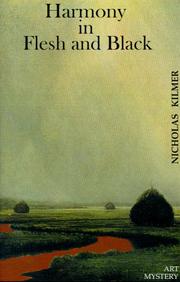
First Book: HARMONY IN FLESH AND BLACK which introduces us to Vietnam vet Fred Taylor, a hard to define kind of guy except to say he is tough, laconic and an art expert. He is the right hand man of the very eccentric, Boston high society art collector Clayton Reed. Skulduggery is a matter of course as Clayton sends Fred out into the art world to follow up his often inspired hunches. (See my review here.)

HARMONY IN FLESH AND BLACK (1995)
MAN WITH A SQUIRREL (1996)
O SACRED HEAD (1997)
DIRTY LINEN (1999)
LAZARUS ARISE (2001)
MADONNA OF THE APES (2005)
A BUTTERFLY IN FLAME (2010)
A PARADISE FOR FOOLS (2011)

Note: The early hard covers of the first four books had simply splendid covers. While I've read the entire series, the first four books are my favorites.


3) The Chris Norgren mysteries by American writer Aaron Elkins begun in 1987:

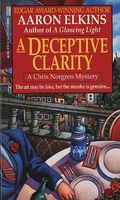
First Book: A DECEPTIVE CLARITY which introduces us to the very likable San Francisco museum curator Chris Norgren as he heads to Berlin to help set-up The Plundered Past exhibit which will feature works of art looted by the Nazis during WWII. (See my review here.)

A DECEPTIVE CLARITY (1987)
A GLANCING LIGHT (1991)
OLD SCORES (1993)


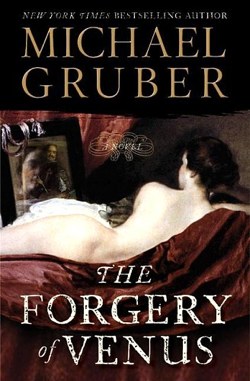
4) Stand-Alone: THE FORGERY OF VENUS (2008) by Michael Gruber
In which the difference between art forgery and artistic art forgery is revealed - more or less. A brilliant book which makes you think about art (and maybe murder) in an eye-opening new way. Is painter Chaz Wilmot mad? You decide.


5) Stand-Alone: LOOT (1999) by Aaron Elkins
My favorite of Elkins' stand-alones and in general one of my favorite books of all time. A re-reader's delight.

A painting - Nazi loot - thought lost forever turns up in a Boston junk shop, followed by murder and the disappearance of the painting yet again.. Ben Revere, ex-art curator begins a quest for the killers which will take him on a danger filled trip to Europe. (Read my review here.)


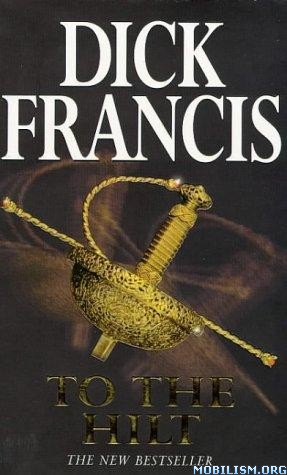
6) Stand-Alone: TO THE HILT (1996) by Dick Francis
My first Dick Francis book, after which I read almost all his books in a great frenzy of discovery. Artist Alexander Kinloch lives an isolated existence in the Scottish Highlands where he paints allegorical paintings of golf courses. (Hey, it all makes perfect sense to me.) When thugs turn up on his doorstep and leave him for dead, he begins an idyll involving friends, family and nasty secrets which takes him to England where he will ask questions nobody wants answered. One of my favorite parts in the book is a moment in time when Alexander describes his painting process in a very luscious way. So damn intriguing.


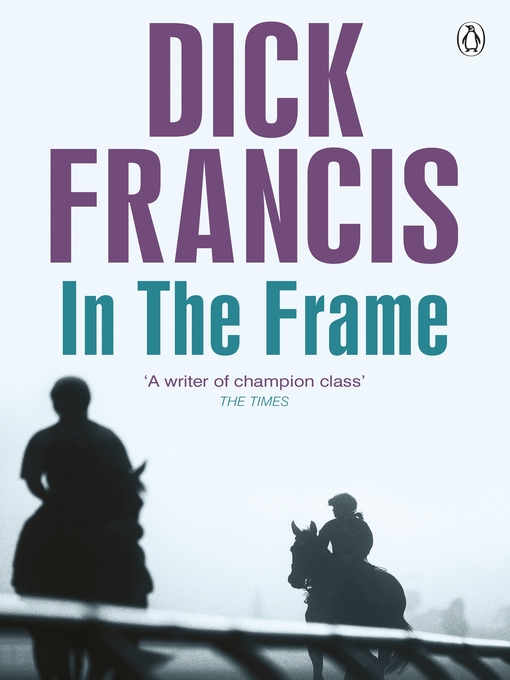
7) Stand-Alone: IN THE FRAME (1976) by Dick Francis
Charles Todd is a well-known English artist who specializes in paintings of horses. When Todd's cousin's house is burglarized and his wife murdered, Todd becomes a suspect and so, of course, he must track down the real killer.

"Few match Francis for dangerous flights of fancy and pure, inventive menace." Boston Herald. Couldn't have said it better myself.


8) Thanks to Les Blatt for reminding me of two of my favorite art mysteries which inexplicably slipped my mind when composing this post earlier. ARTISTS IN CRIME by Ngaio Marsh - the sixth in the Roderick Allyn series by Ngaio Marsh - a dame of the golden age.

How could I forget the book in which Scotland Yard Superintendent Allyn first meets and is smitten by artist Agatha Troy. (He will later marry her.)


9) A CLUTCH OF CONSTABLES by Ngaio Marsh - When Allyn's artist wife Troy goes on a river cruise, murder interrupts the peaceful jaunt. Thanks again Les, for the timely reminder.

*********************


Note:  I might add the Gabriel Allon series by Daniel Silva because the hero is an art restorer - but he is also a part time Mossad agent. Though I've only read a couple of these I've always meant to read more. However, the stories in these books seem to concentrate on spying and the darker aspects of international intrigue than on any art related crimes.

First Book: THE KILL ARTIST (2000)
For the rest of the titles in the series, please use this link.

I heard that there's a book out there which features Leonardo da Vinci in a murder mystery, but I'm a little leery. Besides I can't remember the author or title.


Illustration by the legendary Brad Holland.


Friday, October 5, 2012

Friday's Forgotten (or Overlooked) Book: A DECEPTIVE CLARITY (1987) by Aaron Elkins


(Best I can do, cover-wise. Nothing better to copy on line. It's a shame really because these three books have gorgeous paperback covers. Something you can't really appreciate with this tiny version which blurs if I enlarge it.)

Friday is not only the end of the work week, but it is also, as most of you know, the day to post about Forgotten (or Overlooked) Books. This weekly meme is usually hosted by Patti Abbott, but this week, Todd Mason is doing hosting duty at his blog, Sweet Freedom. So don't forget to check in and see what other neglected books other bloggers are talking about today.

A DECEPTIVE CLARITY is the first book in the Chris Norgren series which, unfortunately, is only three books strong. (At least so far. I live in hope that the author will revive the series sometime.) Aaron Elkins is well known for his terrific 'skeleton doctor' books featuring forensic anthropologist Gideon Oliver (I've read every one) but I am also a big fan of Chris Norgren. Chris is a San Francisco museum curator, a low-key, likable kind of guy who just happens to be brilliant - at least when it comes to his specialty: Renaissance and Baroque art

Chris also has a kind of fumbling knack for getting involved in mysteries and coming to the attention of the  very nasty bad guys who lurk in the shadows of the museum and art business. Who knew the art biz was so rife with skulduggery? I mean, it's a hot-bed of intrigue which, in this case, means murder most foul.

So here's the plot: Chris is in the middle of a divorce after ten years of marriage (his wife ran off with a stockbroker) and is only too happy to head to Europe at his boss's request. There he is to assist his immediate supervisor, the charmingly patrician Peter van Cortlandt as he, in conjunction with the U.S. Army in Berlin, arranges an important show of recovered paintings plundered by the Nazis.

The exhibition is entitled The Plundered Past and is featuring, among other looted treasures, several paintings recently uncovered in a German cave - an astonishing discovery after so many years. The paintings, a Vermeer, a Titian and a Rubens were/are originally owned by the very wealthy Italian, Claudio Bolzano who, though jittery, is lending them for the show. Bolzano is elderly and sickly, but still astute enough to want to make sure that nothing further happens to his beloved paintings. Paintings he'd thought lost forever.

But there appears to be a fly in the ointment. Peter hints strongly that there's something wrong with one of the paintings found in the hidden cache. Something he can't quite explain and will Chris take a closer look while Peter is away smoothing more ruffled feathers connected with the show?

With little to go on, Chris takes a second look at the paintings and we get lots of fascinating tidbits about the art of forgery as well as the specific way in which the Renaissance masters worked. I don't know about you, but I find this sort of detail incredibly interesting - this is an art mystery after all.

When Chris travels to Florence to reassure Bolzano, he stops at his favorite hotel near the church of Santa Maria Novella, a destination Chris considers his own personal pilgrimage.

"Five minutes after I'd checked in and been effused over by Alberto like the old client I was, I was inside the church, standing before a shadowed fresco in pale browns midway down the let wall of the nave. Inconspicuous, washed-out-looking, pretty much ignored in this city crammed with fabulous art treasures, it is  a landmark in the history of art.

There have been lots of landmark artworks and a lot of landmark artists, but only once has a painter single-handedly launched with a single painting a movement that changed art forever. The painter was Masaccio, the painting was the Holy Trinity, and the movement, if that's a strong enough word, was the Renaissance. In painting, anyway; Donatello and Brunelleschi had already gotten the ball rolling in sculpture and architecture.

The twenty-four-year-old Masaccio's innovations were stunning. He used light as no painter before him had. Even the great Giotto's light had been flat, sourceless, an obvious necessity but no more. Masaccio illuminated with it, hid with it, molded with it. And Masaccio's figures are the first 'clothed nudes'; they look as if they could get out of their robes if they wanted to, and nobody in a painting had ever looked that way before...."

(If ever I go to Florence, this is one of the first places I'll be headed to and I hope I am capable of the same sort of awe.)

Back to the story: When the fastidious Peter van Cortlandt turns up dead outside a sleazy German brothel, Chris realizes that something is amiss. He makes the connection between the death of the curator and the possible forgery in the show with the coaching of a good looking Army Major named Anne Green,  protocol liaison.

The plot thickens as Chris begins to get at the truth and attempts are made on his life and an El Greco is blown up along with some guards. And you thought all museum curators did was...uh, curate.

Written with Aaron Elkins customary wit and obvious enjoyment of his craft, A DECEPTIVE CLARITY is definitely worth your time and and any trouble to find it.

For a complete listing of all of Aaron Elkins' books, including the three art mysteries featuring Chris Norgren, please use this link.


Thursday, June 9, 2011

Crime Fiction Alphabet - Letter U is for UNEASY RELATIONS and UNNATURAL SELECTION, both by Aaron Elkins


Aaron Elkins is a helluva writer. I've been reading his work for years so I feel free enough to say that good and loud. He's been churning out the Gideon Oliver, 'skeleton detective' mysteries since forever, making it all look easy - which we all know is a talent in itself. There are lots of terrific Gideon Oliver books to choose from. Elkins is also the writer of the Chris Norgren, art history mysteries of which, unfortunately there are only a few. He has also written several 'stand-alone' books, one of which, LOOT is on my list of All Time Favorite Books. (You've probably heard me rave about LOOT now and again on this blog.) AND as if that weren't enough, he also writes, with his wife Charlotte Elkins, a golf-mystery series. Does the man never sleep?


Because this is an entry in the Crime Fiction Alphabet Community Meme, hosted by Kerrie Smith over at her blog MYSTERIES IN PARADISE, and we are currently up to the Letter U - the nitty-gritty of the alphabet coming up - I'll concentrate today on the two books shown at the top of the post: UNNATURAL SELECTON and UNEASY RELATIONS. Does Elkins have a way with book titles or what? He is also fortunate in that his publisher has a great design staff doing the covers.

If you are not familiar with these books, then I say: get familiar. You might probably want to read the Gideon Oliver books in order, but really, it's not necessary. The main thrust of the books never changes even if Professor Oliver's marital status does. These are not books about Oliver's personal life so much as they are elegant whodunits in the Golden Age style. Mysteries with a beginning, a middle and an end in which, usually, the bad guy is either done for or gets carted off to jail. One of several reasons why I find these books so much fun to read and, in the end, utterly satisfying as mysteries.

Go here to see the entire list of Aaron Elkins' prolific output.  

In UNNATURAL SELECTION (2006) we find Gideon Oliver - a forensics expert known as 'the skeleton detective' - and his park ranger, wildfire-expert wife, Julie, at a conservation gig in the magical (and to me, totally unfamiliar) Isles of Scilly off the British coast of Cornwall. They have been invited to a conference at Star Castle, home of Russian expatriate, Vasily Kozlov, scientist and eccentric millionaire. (Is there any other kind?)

When a bone is discovered in one of the island's neolithic sites, it is assumed to be, well, a 'neolithic' find. Until Gideon takes a look and deduces that the bone is a more modern sample - it is murder yet again. Luckily, the likeable Gideon Oliver,  a most cerebral and celebrated forensics detective is on the case.

In UNEASY RELATIONS (2008) We again find Gideon and Julie in an unfamiliar setting (part of the easy charm of these books) - the Rock of Gibraltar. Anthropologists and Paleolithic archaeologists have been arguing for years over whether Neanderthal and Homo Sapien co-existed side by side around 25,000 years ago.

When a sensational find is made: a skeleton of a woman holding a part-Neanderthal child found in a cave on Gibraltar, the scientific world is amazed. At a conference anniversary celebrating the find, Gideon Oliver is on hand at the current excavation when murder most modern enters the fray.

I continue to recommend these books and the other assorted and terrific writings of Aaron Elkins.

Monday, January 17, 2011

Bones To Pick...


MURDER, MYSTERY AND MAYHEM: A Resource for Readers has an excellent list today of mysteries set within the worlds of anthropology, forensic anthropology, archeology and Egyptology. Check it out.

I've read all the Aaron Elkins mysteries featuring Gideon Oliver, professor of forensic anthropology, and recommend them highly. Oliver, known to his chagrin as The Skeleton Detective travels around the world (though he's based in Washington State) and always finds a skeleton or two and a mystery to solve.

I've also read all of Elizabeth Peters' Victorian mysteries featuring Egyptologists Amelia Peabody and Radcliff Emerson. Wonderful adventures told mostly in the style of H. Rider Haggard. Terrific stylized writing laced with humor and wit: an unbeatable trifecta.

The rest of the listed authors I'm vaguely familiar with, but haven't read. Needless to say, I've added some of the books to my ever-growing TBR List.

Thursday, December 9, 2010

A Favorite Read: LOOT by Aaron Elkins

I've lost track of how many times I've read this book. I took it with me to Las Vegas many years ago, to a BOUCHERCON Convention so that Aaron Elkins himself could sign it for me. He wrote: "To Yvette, May the good guys always win..." It was a fun moment for me and I think, for him, when I told him how much I loved the book and how I liked to reread it. He told me that THAT was the ultimate compliment for a writer - when someone chose to reread his work. He appeared very pleased.

Almost all of Aaron Elkins' books are on my shelves, mostly mysteries featuring forensic anthropologist Gideon Oliver, the so-called Skeleton Detective. It's a terrific series of books and, of course, I've read them all and recommend them highly. Elkins has a second series featuring Chris Norgren, an art historian/museum curator as hero - books I like very much - but unfortunately he stopped writing them years ago. That series consists of only a few books. But they are well worth looking for.

LOOT, is a stand-alone - much as I wish it were otherwise - published in 1999, it is my favorite of all of Aaron Elkins' considerable body of work. It's an art-related mystery/thriller but the hero is Ben Revere, an ex-curator who stumbles upon an incredible find: a lost Velazquez painting in a junk-filled Boston pawnshop. When murder enters the picture, Ben's quiet life is turned upside down as he decides to get at the truth behind the mystery and the sudden reappearance of a masterpiece. His search will take him to Europe and into the darker, murkier corners of the art world as he, ill-equipped for mayhem - but reluctantly dealing with it as best he can -searches for the illusive answers. All the while he is being stalked by bad guys who may or may not be the zealous fringes of some left-over Nazi strain.
As Ben gets more deeply involved, we learn of the Velazquez's odyssey from salt-mine Nazi stash at the end of WWII, to it's eventual, intriguing landing in Boston. When the war in Europe was pretty much over, paintings and other art looted by the Nazis became mired in a kind of mad free-for-all. The Allies, thankfully, found the caves where much of the art had been stored and brought in experts and the like to figure things out, but some of the artwork slipped through the cracks in the scattered security network - masterpieces were lost and never seen again. Until one of them turns up in a seedy American pawnshop fifty years later.

(NOTE: Read more about this - the real-life looting of art treasures in WWII - here. A fascinating non-fiction book and documentary that explains what went on during this time is THE RAPE OF EUROPA The Fate of Europe's Treasures in the Third Reich and the Second World War by Lynn H. Nicolas. Read about it here.)

Okay, so far LOOT sounds like a straightforward tale of intrigue featuring a professorial type on the hunt for the truth about a painting and a killer - sounds esoteric enough. Plus we get to visit a few countries in Europe and learn a bit about art and the nefarious way (based on fact) that Hitler and his minions dealt with their insatiable appetite for, mostly, Renaissance art. We also get some hair-raising escapades and wicked plot-twists along the way - all very well and good. But it's in the way that author Aaron Elkins goes about the writing of all this that turns LOOT into something so much more.

For instance, check out this bit of description once Ben lands in Europe and begins, in his art quest, to have to deal with assorted human odds and ends:

Zykmund Dulska, the art dealer who wanted only to do the right thing, brought to mind a spiteful bullfrog. He was one of those uncomfortably swollen people who seem to have too much blood in their bodies, a spongy, fat-faced man with goggling eyes that wouldn't stop jumping around. At the door he greeted us effusively in English, the only language all four of us understood, and bowed us toward a table on which coffee, tea, and enough fruit, bread and rolls to feed the Chicago Bulls had been meticulously arranged on linen so white it hurt to look at it. His Czech accent - or, as Sergeant Cox might point out, what I took to be a Czech accent - was heavy, his voice a liquorish gargle that didn't go with all the fluttering.

Or this, later, when, in Russia waiting for a flight to Budapest, Ben runs into a friend named Yuri.

"So how was your meeting with the Dragon Lady?" he asked, pumping my hand up and down.

"Not too bad, except that she wouldn't tell me anything. Listen, Yuri, I haven't gotten you in a lot of trouble over this, have I?"

"No, only a little, don't worry."

Now, this doesn't come close to reconstructing our actual conversation, you understand; I've had to take some liberties. Remember, we were communicating in four languages at the same time: German, of which I knew a lot and he knew little; French, of which I knew a little and he knew a lot, Russian, of which he knew a lot and I knew next to nothing; and English, of which he knew next to nothing and I knew a lot. So our dialogue, while its gist was as indicated, wasn't a bit like the model of concision and linearity described above. To spare both of us - you and me - the pain and the laughter of a literal transcription, I'm honing it into something along the lines of comprehensible speech. Anyway, to appreciate the real thing, you'd have had to have been there.

I don't know about you, but this makes me laugh. I love words and wording that make me laugh. When I read this kind of thing, I instantly fall under an author's spell. I'm easy that way.

Later, when Ben lands in Hungary and goes to his hotel, Elkins writes as dry, wry and witty a description of Budapest and the Hungarian character and language as I've ever read. (Though I suppose if you're Hungarian, you might not find it so funny.) I mean, I've never been there, but reading this, makes me feel as if I'd already been and gone.

The Hungarian language is not related to any of the Romance languages, or to the Germanic, the Slavic, the Italic, or any other member of the Indo-European language family. It is (so Alois Feuchtmuller had told me) a member of the Uralic family, subfamily Finno-Ugric, branch Ugric, formal denomination Magyar. Its closest - almost its only - relatives are Ostyak and Vogul, which are still spoken in a few parts of Siberia. As a result, Hungarians have only each other to talk to. Save for the occasional visiting scholar of Finno-Ugric, foreigners who arrive in Budapest can rarely speak more than a few phrases of phrase-book Hungarian. By the same token, Hungarian vacationers who want to be understood on their foreign travels are pretty much limited to the general vicinity of Irkutsk.

It's Alois's theory that this has made them grumpy in their dealings with visitors, over and above the expectable general grumpiness of Eastern Europeans only now emerging from a grim and repressive political system.

...The Hotel Duna wasn't doing anything for my mood either. The minute I walked into the place, I knew that I was in one of the old State Tourist Authority hotels of the Eastern bloc - I'd been in them before, in Prague and East Berlin - now probably privatized but otherwise unchanged in atmosphere and appearance. If you've ever been in one of these places, you know what I mean. The building itself was typical Brezhnev-era style (otherwise fondly known as Neo-Brutal), a drab, cubical hulk with a facade of cement-colored cement. The lobby areas were shabby and neglected, with linoleum floors that smelled of disinfectant, and packed - even at midnight - with frazzled-looking tour groups huddled in clumps, waiting for - well, I'm not sure what they were waiting for. The night staff was overbearing, disgruntled, and pointedly slow. And the air was full of sinister, unanswered questions. Who was the bald man in the black suit who leaned against the counter sucking on a toothpick amd writing something in a notebook every time somebody got on the elevator? What were the cashier and the security guard sniping at each other about under their breath? Why was the chambermaid crying behind the laundry cart?

I LOVE this stuff. While reading the whole Hungarian chapter, I had a big smile on my face and sometimes laughed outright. Elkins can be darkly wicked when he wants to be. But as much as I enjoyed these sections of the book, I also loved meeting the Holocaust survivors Ben encounters on his quest. Aaron Elkins knows how to write, simply and effectively, about honor and triumph of the spirit. And all about the undaunted Big Dog courage of a certain little daschund.

Well, you can tell I loved everything about this book and I hope I've conveyed my enthusiasm to you - enough at least so you'll give LOOT a look-see.
Neo-Brutal. HA!

Tuesday, October 5, 2010

Skeletons Galore

Check out the skeleton cartoons done by F.I. Chagnon for Cincinnati, Ohio's Grave Matters Bookstore in the early to mid-nineties. Funny. Perfect for this time of year, too. I am a big skeleton fan. (Too weird, I know.) For years I had a large skeleton cardboard cut-out hanging in one of my coat closets. Caused quite a stir whenever a guest went to hang a coat. HA! My idea of a joke: skeleton in the closet - get it?

Love the skeleton warriors with swords and shields, in the old (1963) Jason and the Argonauts movie. Great fun to watch.

Big fan of the skeleton covers on the Edgar Award winning Aaron Elkins' Gideon Oliver books, too. Of course, I love what's inside the books as well. Professor of Anthropology Gideon Oliver (known as The Skeleton Doctor) solves mysteries wherever skeletons are found - new or old. This is a terrific mystery series for those of you unfamiliar with it. I've read most every book Elkins has written and I can recommend them all to you.