Wednesday, June 22, 2011

Newest Movie Watched: The King's Speech


I don't often get out to the movies much anymore, so I usually wait until they show up on Netflix. Last night I watched THE KING'S SPEECH for the first time - the dvd actually arrived a few weeks ago but I'd lost track of it. It happens sometimes.

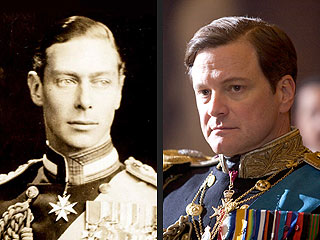
Anyway, I'm probably one of the few remaining people in the known world who hadn't seen this, but now I'm happy to say that - yes - I've seen it and loved it to pieces. (No big surprise there - you know what an Anglophile I am.) The Brits do this sort of historical movie so very very well. They are masters of the form. Colin Firth was deserving of his Oscar, it would have been an outrage if he HADN'T won. I'm just glad he did. I'm saying it belatedly, but I'm saying it. He was superb at George VI, the reluctant king.


In my view, Geoffrey Rush was just as wonderful as the King's eccentric speech therapist, Lionel Logue. But then, for me, Geoffrey Rush can do no wrong. He is superb in anything he undertakes.


And while I'm at it, I'm going to mention Helena Bonham Carter who in her own quiet, steely way is every bit as good as Firth and Rush. I was watching and thinking, this woman will live to be a 100. I kept looking at the little Elizabeth and thinking she is Queen now going into her 90's soon. I mean, the film fairly drips with history on-going.


It's funny how fate works. George VI was the right king at the right time - for a war-torn England. His brother, the ineffectual and let's face it - not very bright - David, Prince of Wales (Edward VIII) would have been a disaster - might even have hurt the war effort. Thank goodness he was forced to abdicate when he did. Ironically, we have a lot to thank Wallis Simpson for - in my view.

THE KING'S SPEECH is a truly memorable movie - a classic. If by some throw of the dice you haven't seen it, all I can say is: don't wait another second.

Where Women Create


One of my very favorite of the 'idea' magazines WHERE WOMEN CREATE has a terrific piece in the May/June/July issue (see cover above) particularly pertinent to a film-lovers like us. The article in WWC features the work space of the very fortunate Bobi Garland who works as a costume researcher, librarian and archivist for the Western Costume Company in California. For me or for anyone, really, who loves movies, design and history, this seems like a dream job.

"...work at this Hollywood institution has been one big adventure, filled with discovery and wonder in the "greatest attic in the world."

Western Costume is coming up on its Centennial and continues to be a very important part of the movie business. Their workrooms and storage units hold costumes which are almost as famous and recognizable as the actors and actresses who wore them on screen. From the ruby red slippers worn by Judy Garland in THE WIZARD OF OZ to Rudolph Valentino's SHEIK robes to gowns from GONE WITH THE WIND, they are all stored at Western Costume. "Research is the first step for a costume designer..." This seems obvious to me, but how often do we stop to think about the process behind the creation of the wonderful costumes we see onscreen?

The multi-page lay-out  in the current issue of WWC allows the reader access to Western Costume's work-rooms and historical research library. One of the pages featured shows photos from the archives of turn of the century uniforms worn by city sanitation workers, porters and the like. The sort of thing any designer working on 'period' film would have to pay attention to. But the kind of detail the average movie viewer never stops to think about. I love learning about this sort of thing.

If this is not too esoteric for you, then I recommend picking up a copy of this issue of WHERE WOMEN CREATE. The magazine is beautifully put together (I think of it more as a book with a soft cover really, than just a 'magazine'). WWC is not only creatively inspiring but it is also great fun to read about and see the studio work spaces of  the various women entrepreneurs featured.

You can link here to the Where Women Create website.

P.S. No, I don't work for the magazine nor do I get paid for singing their praises.

Wednesday: Quote for the Day


Start where you are.
Use what you have.
Do what you can.

Arthur Ashe

Tuesday, June 21, 2011

Spenser: To Be Continued by Ace Atkins...

Robert B. Parker

Well, as usual, I'm late to the show but what the heck. I've just learned that one of my favorite writers, Mississippian Ace Atkins, has not only signed on to continue writing the Spenser novels of the late Robert B. Parker but he has the first novel already written. How did I find out? By reading this post at The Rap Sheet which includes an interview with Ace.

I've read all of the Spenser novels except the last one - SIXKILL - the 39th, written by Parker who passed away early last year at the age of 77. I think of myself as a self-styled expert on Parker's novels. Not at all sure if I like the idea of the continuation of any author's work. i.e. never did like the Nero Wolfe novels written after the death of Rex Stout. But I do like some of the Sherlock Holmes books written (and continuing to be written) after Conan Doyle's death.


From the example of the Holmes books alone, I'm convinced it IS possible to do this sort of thing well. Anything's possible. I think the trick is not to try and copy completely the writing style of the deceased author. Nobody likes an imitation. As long as we, long time readers of the Spenser books, can pick up with Spenser where Bob Parker left off, that will be good enough. I hope that Ace will continue with Spenser in his own way and not try too hard to duplicate the Parker style. First of all, it can't be done - well, yeah, it could be done, just not well. Bob was an original. Bob is gone. He is not alive and writing. (Much as it saddens us.) Spenser is so much larger than life that I'm quite willing to go along with his adventures told from a slightly different point of view. From Ace's p.o.v.

Ace Atkins

All I can definitely say is that Ace is a helluva writer - I've read almost all the books he's ever written as well so I know whereof I speak. If anyone can keep the Spenser stories alive and kicking, it's Ace.

What do you think of all this?

Top Ten Tuesday: Top Ten Reasons Why I Like Being A Blogger.


Top Ten Tuesday is a Weekly Meme hosted by the gals over at THE BROKE AND THE BOOKISH. Every week it's a new literary theme song. This week,  in honor of B and B's one year Blog-O-Versary, we're to write  the Top Ten Reasons Why I Like Being A Blogger.

Coincidentally, my one year Blog-O-Versary is coming up in July, so this subject is now very near and dear to my heart. (I'll be having my own little Thank You Giveaway next month - so stay tuned for that.) In the meantime, be sure and check in at THE BROKE AND THE BOOKISH to see what other bloggers are saying about this week's theme.

In the meantime: here are my very own TOP TEN REASONS WHY I LOVE BLOGGING.

Reason Number One:  To be frank, I love talking about books and films and art and anything else that strikes my fancy,  mainly because I'm the sort of person who enjoys giving my opinions about anything and everything (even if no one asks) so I like to think that blogging was practically invented for me.

Reason Number Two: I enjoy being part of an online blogging community which has shown itself to be a welcoming place of writers and opinionaters who not only enjoy talking about their favorite books, films and whatnot, but are ready, willing and gracious enough to accept the work of this new kid on the block. (Even a year in, I still feel 'new,' still 'feeling my way.') I mean, who am I? I wondered at the beginning if anyone would care enough to want to read what I had to say about anything. But it turns out that people are liking what I do and let's face it, acceptance is a very soothing balm.

Reason Number Three: I am thrilled to meet and greet other bloggers with similar interests online, while hoping that at some point in the future, we will actually get to meet in 'real' life. But if not,  the truth is that just from reading their blogs, I already feel as if I know many of these bloggers. The question is: Who knew there were this many fun people abroad in the world? People who love the same sort of  esoteric things I do? Surprise!

Reason Number Four: Reading the work of other bloggers has sparked my imagination and broadened my own horizons. Books only vaguely lurking on the periphery of my mind have now captured my attention and inclination. Mount To-Be-Read has reached Matterhorn proportions! Books I might never have seriously thought about reading are now regularly brought home from the library by yours truly. And while some have been duds, others have have been true 'finds'. Needless to say, it has been a humbling experience as well since I'd always thought of myself as being a pretty well-read person. Little did I know.

Reason Number Five: I am such a lover of vintage books and films and I am so thankful that  blogging has put me in touch with the most delightful people who share this love of mine. Go figure. Hey, if you thought at any time in your life that you were unique - blogging will quickly disabuse you of this notion. And this is not a bad thing. Entirely. Ha!

Reason Number Six: Blogging helps me - one of the most scatter-brained people I know - to necessarily focus my attention on one book, one subject, at a time. It also helps me, a person already burdened with 'old lady memory' to keep more of what I read active in my brain for a longer period of time. (Just don't expect miracles.) Blogging helps me compartmentalize which, I think, can be a very good thing.

Reason Number Seven: Blogging about films has also put me in touch with film lovers who, at the drop of a film-sprocket, will recommend their favorite movies - some of which I have never heard of before and can't wait to dial up on Netflix. Not only that, but reading some of the in-depth movie recommendations has taught me a thing or two or three about movies - known or unknown - that I had just never stopped to think about before.  In a way, it's a brand new world out there even if you are mostly talking old movies.

Reason Number Eight: I can be as nerdy or as bookish or as eclectic as I like and there will always be someone out there who will, in general, know what I'm talking about. And while all this 'talking' is going on, most importantly, I am exercising my writing chops. I do enjoy writing and blogging is a way of writing every day because if you're not writing, you're not a writer. Wise words I saw on a blog somewhere. (Didn't say my memory was now perfect.)

Reason Number Nine: I like hearing from authors I've written about. When this first happened, I was thrilled. I've worked with authors before, so why I was so taken aback that any one of them might read my blog and make a comment, I don't know, but I was. Either they post a comment or contact me by email and of course, I think of this as a real perk because when it comes to books, I can be a total groupie. Ha!

Reason Number Ten: I know next to nothing about computers and what they can and cannot do. When it comes to this thing with a screen sitting on my desk,  I am hopelessly over-matched. The littlest kindergartener knows more about computers than I do. And yet, here I am.  I have a blog and I am managing it day to day - well, with my brilliant daughter's help and much hand holding it's true, but hey, I'm still here. Blogging forces you to learn technical stuff even if you had no mind to learn anything remotely technical going in. Blogging FORCES you to learn new things. That can't be all bad. Ha!
 

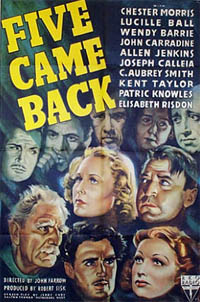
Forgotten Movie Tuesday: FIVE CAME BACK (1939) starring Chester Morris, Lucille Ball, Wendy Barrie, Joseph Calleia and C. Aubrey Smith


(Couldn't find a poster in English that didn't feature just Ekberg.)

Forgotten Films Tuesday is a weekly meme hosted by Todd Mason at his blog SWEET FREEDOM. Don't forget to check over there and see who else is posting a forgotten film or two or three, waiting to be re-discovered.

If the TV is ever on in any room I happen to be in and this film comes on (as it does, occasionally, thanks to Turner Classic Movies), I drop everything and sit mesmerized. There are certain movies that always make me do this - FIVE CAME BACK (1939) starring Chester Morris, Lucille Ball, Wendy Barrie, John Carradine and Joseph Calleia is one of them.

But the funny thing is that this story was also filmed a second time under the title BACK FROM ETERNITY (1956) starring Rod Steiger, Anita Ekberg, Robert Ryan, Keith Andes, Phyllis Kirk and Gene Barry. A film directed and produced by John Farrow (Mia's father) which is just as good as the original also directed and produced by Farrow. The first screenplay was written by Jerome Cady, Dalton Trumbo and Nathaniel West. Second screenplay was by Richard Carroll who originated the story in the first place, and Jonathan Latimer. Either/or - these films are worth watching anytime of the day or night. Unfortunately, Netflix does not, currently, show either on their lists. Too bad.


Obviously, it's the inherent story - melodramatic as it may be - that fascinates. The second movie follows the first pretty closely, story-wise. So I'll talk about both since, really, if you can't find one but find the other - it's all good.


The basic plot is this: a bunch of passengers board a plane headed for South America with a stop someplace in Central America to pick up a passenger. The plane is then blown off course by a storm or an accident on board - can't remember which - or maybe a combo of both, anyway, it crashes in the jungle.  On board the plane are: the pilot and co-pilot (obviously), an elderly couple on vacation, a kid with his guardian, a dame played in the earlier film by Lucille Ball and in the later film by Anita Ekberg, a couple engaged to be married, and most important, as it turns out, an assassin in the custody of a cop - the reason the plane made a landing in Central America to begin with. The assassin is played in the original film by Joseph Calleia who is chillingly good as Vasquez - a man with his own code of honor and ethics. In the later film, the assassin is played by Rod Steiger as Vasquel (slight name change) who is just as good in the part, but playing a man of more volatile temperament than Calleia's steely-eyed Vasquez.


Once the plane crash lands in the jungle, landing intact - very important as it turns out - though an engine is shot - the various passengers behave each according to their own established characters. Some likable, some not. A couple are heroes, all are stressed to the breaking point. Relationships are formed, friendships made or broken.You know how these stories go. I liked Chester Morris as the pilot in the 1939 version, playing off Lucille Ball's hard-lucked but tender-hearted dame. And I've always liked C. Aubrey Smith in anything.


In the later film, I like Keith Andes as the impressionable co-pilot falling for Phyllis Thaxter as she realizes what a jerk her fiance - played by a slimy Gene Barry - really is. I also liked Robert Ryan as the pilot in the 1956 version, but not so much Anita Ekberg as the dame. She doesn't have the ability to project a soft heart beneath the hard-boiled veneer.

Back to the story: The plane's radio is dead but the pilot and co-pilot believe they can patch the one remaining engine and take off again. To that end, everyone is put to work clearing a path for some sort of 'runway'.

The various passengers play off each other nicely, their strengths and weaknesses soon becoming apparent. Crash landing in the jungle has a tendency to break through any lingering social class strictures.

But the thing, I think, that sets this survivor story apart from other plane crash scenarios is this: the area in which the plane has landed is known to be inhabited by tribes of headhunters. Yeah, that'll get the old adrenalin working overtime. After a few hours on the ground, the drums begin beating and the passengers slowly realize that if they don't get off the ground soon, they won't get off at all. It's a race against time to get the engine fixed and the battered plane ready to fly again.

Scene from FIVE CAME BACK.

Scene from BACK FROM ETERNITY.

Once the engine is fixed, the pilot realizes they can't all board the plane. Figuring by weight, only five passengers can be allowed to board and take off, else the plane won't get enough lift. Better to save five than save none. A decision must quickly be made as to who will board and who will stay behind, invariably to be killed by the headhunters - natives whose presence is felt but who are never seen in the film.


Unknown to the rest of the passengers, the assassin, Vasquez (Vasquel) earlier found a gun on board and has been holding on to it. In the end when none can decide who will board and fighting breaks out, Vasquez takes charge. In the doing he must shoot and kill one of the passengers who will not listen to reason.

Being a pragmatic sort and temporarily in power, he will decide who lives and who dies. He, himself, will stay behind as he has no reason to go anywhere - he knows the fate that awaits him should he go 'home'. The elderly couple decide to stay behind too because of their age. They cannot in good conscience take the place of two younger passengers.

As the plane takes off, the elderly man asks Vasquez to make sure his wife doesn't suffer. It's a heartbreaking moment especially as Vasquez only has two bullets left. In the end, he does the noble thing and kills the elderly professor and his wife and then, as the drums grow more insistent, the sound coming closer and closer, he sits and waits for the headhunters to find him.

It is a harrowing ending, but a memorable one, as far as movie-making goes. In the end, who are the heroes? Men who understand their strengths and weaknesses. Men who can think a thing through and take a stand, who can make the decision that needs making. Men of competence. A bit obvious to be sure, but I like it.

It occurs to me that many sci-fi films have used this scenario (substitute blood thirsty aliens for head hunters) quite a few times and will probably continue to do so. Why not? A good story is always worth the re-telling.


Monday, June 20, 2011

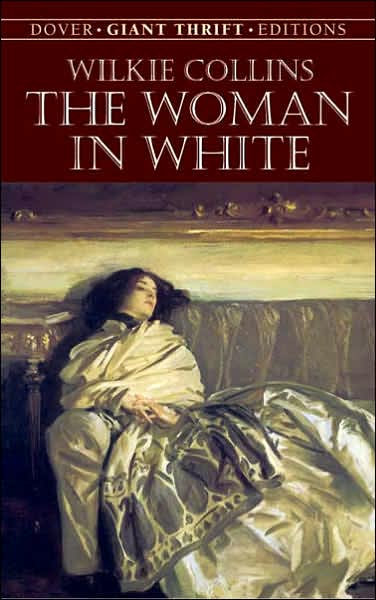
Monday Book Review: As THE WOMAN IN WHITE Turns: Part Two.


I reviewed the first half of Wilkie Collins' classic THE WOMAN IN WHITE some days ago - at this link. So now I've returned with the second half of my review of a book I never expected to love as much as I do. My experience with Wilkie Collins is/was limited. I'd only read THE MOONSTONE eons ago and didn't remember much about it. (I'm going to be re-reading that in a few weeks simply because I would be a fool not to.) But I joined in The Victorian Reading Challenge (on a whim) a couple of months ago and hadn't done much since - been too busy reading other stuff. Wilkie Collins is my first Victorian author (in years) and he definitely won't be the last.

The Victorian Reading Challenge is hosted by Bethany at SUBTLE MELODRAMA.

Before I go any further, I thought I'd add a sentence which, to me, exemplifies much of what I like about Victorian Literature:

June18th - The misery of self-reproach which I suffered yesterday evening, on hearing what Laura told me in the boat-house, returned in the loneliness of the night, and kept me waking and wretched for hours.

Isn't this excessively marvelous? It's from the pages written by Vincent Gilmore of Chancery Lane, Solicitor - to further the plot of THE WOMAN IN WHITE. Although from its tone you might think it was was an excerpt from a woman's journal. Evidently men and women were prone to overwrought thoughts and actions during Victoria's reign.

I like it.

One of the reasons why I like it is that, despite the flourishes it is exactly what it purports to be. There's no getting around the meaning of these words. The man was obviously overwrought and this is evident. I love the use of fairly specific language to describe EXACTLY what a character means - the English language is a beautiful thing if used well and I love it used in this dramatic fashion.

When last we left the story, poor but honest and honorable drawing master Mr. Walter Hartright (our hero) was gone from the scene. He'd left for Central America to get away from the very idea that the love of his life, Laura Fairlie - a rich and beautiful, but not especially brilliant, young woman - had been forced, by societal and other obligations to marry Sir Percival Glyde, an unprincipled cad and desperate fortune-hunter. Just how desperate we were yet to find out. Indeed, at this point in the reading, we were left to wonder if Walter would ever return to the increasingly gloomy narrative.

The story continues to be told from different points of view, journals, letters and 'testimony' of witnesses as the story evolves.

Laura - Lady Glyde - has moved into Sir Percival's large but run-down estate (Sir Percival not having had the necessary wherewithal to maintain the property) after a month-long honeymoon in Italy. She is joined at Glyde's house by her half-sister and confidant, Marian Halcomb - a young woman denied a husband in Victorian Society because of her ugliness and possibly, her forthright manner. But what Marian lacks in outer beauty she makes up for in inner strength, imagination and daring. I can't help but wish that  Walter had fallen in love with her instead. (I'm sure I'm not the only reader who has ever thought that. I often wonder if it occurred to Wilkie Collins at all.)

Making up the rest of the cast is another couple whom Sir Percival appears to have picked up in Italy - the rotund and smarmy Count Fosco, of supposed Italian nobility - and his oddly complaisant wife, the Countess who happens to be a cousin of the Fairlies and as such, in line for a 10,000 pound inheritance should anything happen to Laura. Uh-oh.

It doesn't take a genius to figure out that something is not quite right in this strange household. Sure enough, Glyde begins almost immediately to show his true colors by attempting to force Laura to sign some official looking papers which he won't allow her to read. (!!??) But even Laura has her limits and she refuses to sign without reading the content. Good for her. I don't think I could have kept on reading if she'd meekly signed without protest. Though there is some 'hemming and hawing' but thank goodness, Marian is there to provide ballast.

I did wonder though, why Percival didn't simply forge Laura's signature. But perhaps there are some things even an unprincipled cad will not do. In truth, forgery would have been the least of his villainy especially since we learn later that he had, indeed, forged a line or two in a wedding registry. But I can say no more for fear of giving away a main plot point.

Soon enough it becomes evident that Glyde will stick at nothing (except forgery), not even physical intimidation, to get his hands on Laura's money AND that the oily Count Fosco is meant to act as the 'good cop' in their 'bad cop/good cop' routine. What I find most interesting about these pages is that with Walter off in the wilds of Central America and Laura's lawyer unable to do much because of the austere marriage settlement (Victorian pre-nup), Laura and Marian are pretty much on their own. In Victorian society there wasn't much a woman could do once she married and became basically her husband's chattel, most especially if she had no father or older brother to step in on her account. So Laura must resort to lots of hand-wringing and 'what shall we do? what shall we do? That sort of thing.

It is touching (and frustrating) to think how helpless she and Marian truly are under the strictures of the law of the land AND in society's narrow view.

I know that Wilkie Collins didn't hold much with marriage, his own unconventional living arrangements are proof enough of that. Obviously he didn't think much of what marriage did to women. This view comes across clearly in THE WOMAN IN WHITE. Laura Fairlie was pretty much doomed from the start if not for the machinations of Marian and later, Walter Hartright who comes back into the plot in the veritable nick of time.

As does Anne Cartherick - remember her? She is 'the woman in white' of the title and she is still lurking in the shadows, on the run from the men in white who want nothing more than to find her and take her back to the lunatic asylum.

We soon find out that Anne Catherick might be in possession of a deep, dark secret which could destroy Sir Percival Glyde. When Anne tries again to see Laura and warn her (remember she sent Laura the anonymous letter warning her - to no avail - not to marry Percival Glyde), she is sealing her own doom once the nefarious Count Fosco with his cockatoo, canaries and white mice (??!!) picks up the scent. His modus vivendi is making sure that nothing happens to Glyde who has promised him [Fosco] a cut of Laura's money. Greed and self-importance guides Fosco who is one of the sleaziest, slimiest villains in literary history. Yet the man can't be all bad, he does fall head over heels for Marian Halcomb. He calls her 'magnificent' and you know, in truth, she is.

But oh, is Fosco odious. He is the kind of cunning, operatic villain you hiss at. A man who thinks he knows himself but is hardly aware of his own villainy. He has an excuse and a reason for everything he does and expects you (as we learn later in his self-explaining, self-excusing treatise) to overlook his methods because his motives surely can't be seen as anything but noble.

Okay, long story short: Earlier, it had been made clear to us that Anne Catherick and Laura Fairlie have a very strong physical resemblance to each other. (When all is revealed in the end, you will learn why this should be so.) With that in mind, a hideous plot is hatched - based on this resemblance - by Fosco and Glyde and is carried out with a willful proficiency and malice. Your heart will be in your mouth as you read of the length and breadth that Fosco and Glyde will go to get their hands on Laura's money. Poor Anne Catherick. Poor Laura.

I can say no more without giving away too much more of the plot. But I will say this: Walter Hartright comes back on the scene just in the nick of time. Literally.

From then on it's sheer hard sleuthing grunt work on Walter's part that will help save the day and it is a happy day indeed when we read that Glyde and later, Fosco, both come to a very bad end. Two more unprincipled villains more deseerving of their bad endings you will never meet.

Also near the end, in full circle mode, we welcome back the delightfully exuberant - tiny in stature but enormous in heart - Professor Pesca who had, in the first few pages of the book, been responsible for Walter's getting the job as drawing master to Laura and Marian. Though this time around it is a Pesca who harbors deep and deadly secrets which belie his cheerful countenance. Still, he is a great help in bringing about a satisfactory ending to this harrowing Victorian tale of greed and malevolence in the undaunted face of true love.

I do hope that if you're not familiar with Wilkie Collins THE WOMAN IN WHITE, you will rectify that oversight immediately. But make sure you have the time to set aside. This is definitely a book that will keep you turning the pages to see what happens next until the wee hours of the morning. I loved it.


Thanks to Kathy for the idea to use 'As THE WOMAN IN WHITE Turns' for a title.

Sunday, June 19, 2011

Agatha Christie Vintage Covers: You know you love them.


This is my second entry this month in the Agatha Christie Carnival hosted by Kerrie Smith over at her blog, MYSTERIES IN PARADISE. I thought you'd like to see more Vintage Christie book covers just for the heck of it. Again I ask: why aren't modern day dust jackets as much wicked fun as these?

I wish someone would put together a museum exhibit of the artwork from old mystery book covers. That would be something really special. It might take real detective work to track down the artwork and get the covers all together in one place. But I don't think it would be impossible.

Sunday Salon: Happy Father's Day...


...to all you daddies out there. Have an extra-special wonderful day.


Saturday, June 18, 2011

Even More Mail Loot!


Well, what can I say? It's been a week filled with an embarrassment of riches. Book-wise.

Guess what arrived in the mail?  Go ahead, take a guess. All together now: A book!!

This time out it is a prezzie from my good blogging friend, John Norris of PRETTY SINISTER BOOKS (don't you love that title?). Out of the blue, a couple of weeks ago he decided I needed to have the first book in the Gervase Fen series written by Edmund Crisp.

You may remember that I was delightfully bowled over by the only Fen book I'd ever read: THE MOVING TOYSHOP (now officially one of my all time favorite books) and reviewed it happily while wishing my neighborhood library had Crispin on its shelves which it doesn't. Well, in stepped John and very nicely too - he said he had an extra copy of THE CASE OF THE GILDED FLY and would I like it?

Is the Pope Catholic?

And now I have a second Crispin book to add to my own personal library. (THE MOVING TOYSHOP being an old Penguin copy I found one day on my shelves. Put there I suppose, by book elves.

The copy John sent me is a very good paperback edition carefully wrapped in plastic and so pristine it may take me awhile to get up the nerve to peel it back and read the book. (Though my copy, I might add, is in much better condition than the one shown above.)

It gets even better.

The book, wrapped in plastic to keep it nice and fresh was also wrapped in the funniest wrapping paper with little monsters all over it AND John's official business sticker: Pretty Sinister Books Read This ...or else!

Don't you love it? I laughed out loud when I unpacked it.

THANK YOU, John! You are a veritable peach!

Saturday Salon: A Favorite Painting or Two or Three...


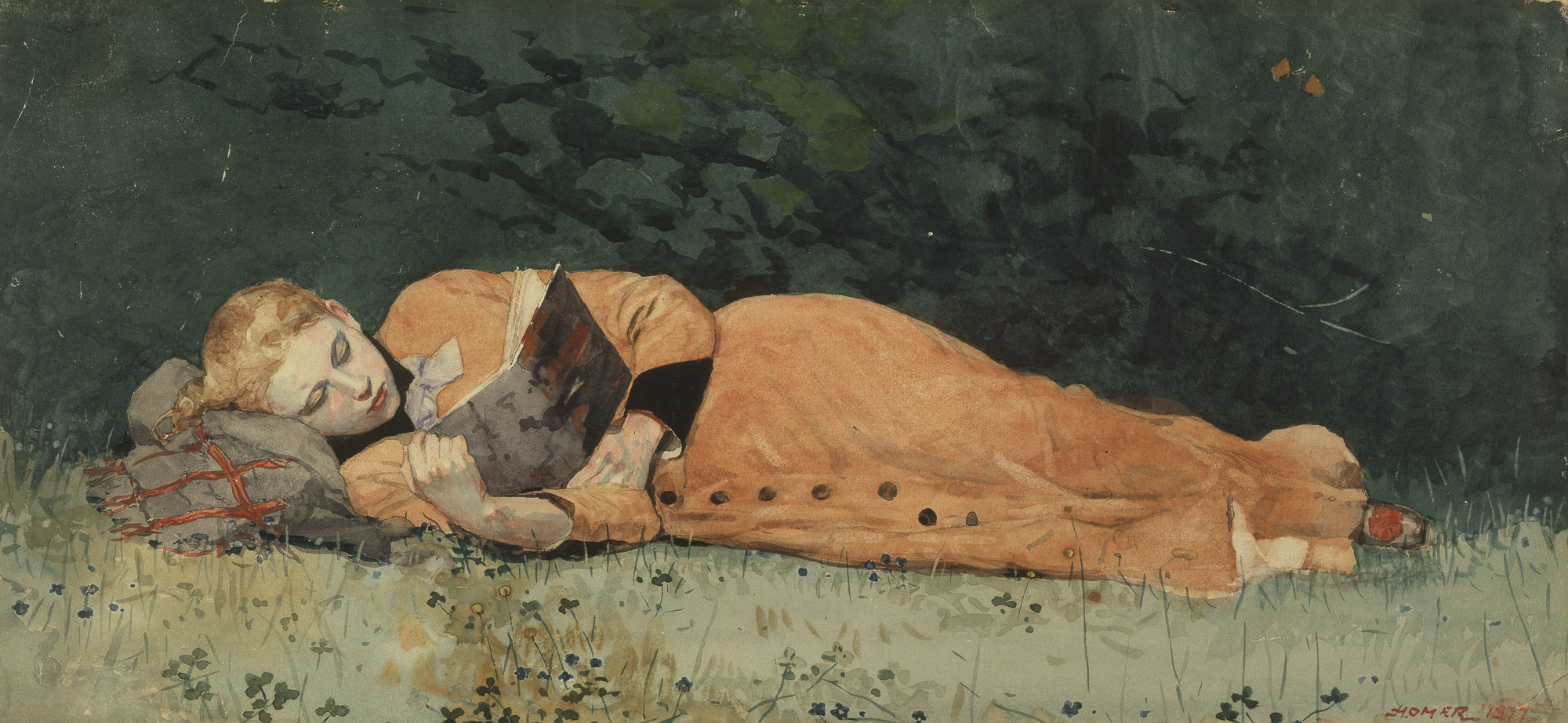
It's Saturday, so it's Art Appreciation Day (as I like to call it) around these parts. Winslow Homer 1836 - 1910 was an extraordinary 19th Century American self-taught master whose work you are familiar with, even if you've only ever seen it on my blog header. Yes, the woman in orange relaxing with a good book is Winslow Homer's work.


Homer painted various real-life and often 'heroic' subjects, most especially down to the sea in ships. Well known for his marine themes, he also painted women and men in naturalistic, romantic landscapes and earlier, soldiers in Civil War settings. But there was/is a recognizable and often turbulent sweep to his seascapes which make his work almost instantly recognizable.

And yet he also painted the woman with a book in my blog header. One of my favorite paintings.

Read more about the life and work of Winslow Homer here.

See a National Gallery of Art slide show of Winslow Homer work here.


This painting is titled Dad's Coming, so I thought it particularly appropriate for this Father's Day Weekend.

Friday, June 17, 2011

Crime Fiction Alphabet 2011 - Letter V is for VERSE OF THE VAMPYRE by Diana Killian


No, no, get it out of your mind. Immediately. This is not a book about vampires - actual vampires that is. Not at all. It's just a book with a catchy vampire title. So even if you're currently suffering from vampire fatigue, this review will not agitate you in the least. Trust me.

Disclosure: I have read two books about actual vampires in my whole life: SUNSHINE by Robin McKinley which I recommend to anyone who doesn't like vampire books and INTERVIEW WITH THE VAMPIRE by Anne Rice which I don't recommend to anyone.

I do plan on reading DRACULA by Bram Stoker for my Victorian Reading Challenge but that's later on in the year and besides, the book is a lit classic. I'm covered.

Back to VERSE OF THE VAMPYRE. (A great title, you have to admit.) Perfect for the Letter V entry in Kerrie Smith's weekly meme - Crime Fiction Alphabet 2011. WXYZ are the letters still left and this is where it gets really tricky, especially for XY and Z. My mind is blank waiting for inspiration. Please use the link to see the other Letter V posts at Kerrie's blog, MYSTERIES IN PARADISE.

This title is the second book in the Poetic Death series by Diana Killian begun with the excellent debut novel, HIGH RHYMES AND MISDEMEANORS. (Killian's titles alone are terrific don't you think?) The books are set in and around the Lake District of England - if there is a more beautiful spot on earth, by the way, I haven't seen it.

The stories concern the mis-adventures of American literary scholar Grace Hollister who, in the first book was travelling in Wordsworth country when murder and mayhem interrupted the trip and she met the very enigmatic antique dealer Peter Fox. Needless to say, Ms Hollister has decided stay on a bit longer in England and see what develops. We should all be so lucky.

Here's the copy from the back of  VERSE OF THE VAMPYRE to give you an idea of what goes on in this idyllic area of England, at least according to the author: As Halloween comes to the English Village of Innisdale all manner of trickery leads to intrigue and mortal danger...

American schoolteacher and literary scholar Grace Hollister has extended her stay in the Lake District to do research and act as advisor (that's her story and she's sticking to it) to a local production of THE VAMPYRE, a play written by Lord Byron's doctor. But when accidents begin befalling the cast - culminating in the death of a society lady at a masquerade ball, replete with puncture wounds on her neck - it seems a real vampire may be roaming the village. (Uh-oh.)

If that's not chilling enough, Grace is being stalked and her enigmatic love interest, ex-jewel thief (Oh, did I forget to mention that little detail?) Peter Fox, has been behaving suspiciously (what - again?) after a rash of local thefts. Armed with little more than her passion for poetry and a determined spirit, Grace sets out to solve both mysteries...and to take her own bite out of crime. (I didn't make up that last line. It's all here in black and white.)

These books were a very nice surprise for me because truth to tell I hadn't expected much when I picked up the arc of HIGH RHYMES AND MISDEMEANORS a few years ago. I'd only decided to read it because I love the setting. I mean - who wouldn't? But that's the most fun of reading, I think, the surprise: a book you hadn't, necessarily, expected much from that makes you sit up and take notice.

Besides the gorgeous English Lake District setting, you can also expect to like the two main characters Grace and Peter, though Peter takes a bit of getting used to at first. You will also pick up bits and pieces about the Lake Poets and their lives and you'll get to hang out in a beautiful English village. Not much there not to like. Diana Killian is a clever, talented and imaginative writer who has, so far, written four books in the series and I'm here to recommend three of them. (I haven't yet read the fourth, but I plan to.)

TIP: Seeing that the setting for this book is Halloween in Innisdale, by the way, you may want to wait and read the book in the Fall.

Link here to Diana Killian's fun website.

Link here to get a complete instant list of Diana's books.

Turns out that Diana has a second series about which I know nothing. I think I have some catch-up reading to do. See what happens when you turn your back for a moment?

Forgotten Books Friday: IN DEFENSE OF LOVE (1987) by Kathleen Creighton


I know. How dare I do a post featuring a 'romance' novel as my entry in Friday's Forgotten Books meme? Well, I dare because this happens to be one of my most favorite romantic suspense books and Katheleen Creighton is a terrific writer. After all, lots of us, most of us, read mysteries which are a specified 'genre' as well. We should be used to this sort of name-calling.

Friday's Forgotten Book is a weekly meme usually hosted by Patti Abbott at her blog, PATTINASE. But this week, Patti is away and Todd Mason is doing the hosting duties at his blog, SWEET FREEDOM.  Please check out Todd's blog to see the complete list of meme participants and their 'forgotten books' posts.

IN DEFENSE OF LOVE was published in 1987 as part of Silhouette Books' monthly, Silhouette Intimate Moments line which makes it that much harder to stumble across unless you haunt used book stores or internet sites which carry older romance novels. But if you do, and you're lucky, then you might. And then, occasionally, some of the more popular titles from the old Silhouette lines are re-packaged and reprinted. And of course, there's always Paperback Swap.

I've continued to be amazed, then and now, how a monthly line of books could, even occasionally, publish a real 'keeper' of a novel. But they did and I assume they still do. Many of today's most popular contemporary and/or historical novelists got their starts with Harlequin and Silhouette. i.e. Janet Evanovich, Sandra Brown, Jennifer Crusie, Jayne Ann Krentz, etc. These monthly lines were and continue to be good farm systems for writers.

There are some time-wise anachronisms in IN DEFENSE OF LOVE, it was the 80's after all, but they are easy enough to overlook since the story is a good one and moves along at a nice suspenseful clip. Part thriller, part romance, this is the story of 42 year old Michael Snow (one of my all time favorite character names), a judge in the L.A. county court system.  He is a widower, aloof and pensive and very self-contained, not to mention, handsome. He is currently hearing the case of some mob connected guys in his courtroom and has begun receiving death threats. But he has turned down police protection because he isn't the type to make a fuss - he values his privacy and doesn't want the press to learn about the threats and possibly make cause to have the case dismissed. Okay.

The problem is that the defendants have hired a hit man to do in the judge. You will probably guess who the hit man is pretty early in but that doesn't spoil the fun of reading this entertaining book. It's still a clever 'take' on the whole killer for hire thing. Not so much today, but then.

Brady Flynn is a young, attractive courtroom artist with a headful of brown curls - I'd remembered the hair as being red, but on re-reading, I was wrong. She is a free-spirited soul who has lately, to her chagrin, begun sketching Judge Snow in between witnesses at the trial, day-dreaming without meaning to during lulls in the case. She has no clue that the judge has been threatened. Brady is a likable character (that's half the battle right there), an excellent artist who is as diametrically different from the judge in personality and outlook as two people can be. She thinks of him as the stern, 'George Washington' of the court circuit. He doesn't even know her name, doesn't notice her much at all, except for the crazy plastic thingy holding up her tumble of brown hair - hey, it's a romance.

The casual Brady is a completely different sort from his late wife who was calm, cool and sophisticated. Part of the humor in the book is in reading how Judge Snow, against all his better judgement, finds himself falling for Brady and along the way, mistaking true love and 'free' love and Brady's attitude about each.

How these two get together is very fun to read about especially if you, like me, are a sucker for happy endings AND well-written romances which interweave thrills and chills with the love angle. But it has to be done just right, has to be a proper mix, and Kathleen Creighton knows how to do this sort of thing very well.

When an attempt on Judge Snow's life literally drags Brady into the mix one rainy evening, he has little choice but to confide in her especially once she convinces him to come home with her. She lives up in the mountains and no one on earth will know where he is at least for a couple of days. The judge at first rebels, but then sees the sense in hiding out in the 'least likely' place.

The story is briskly paced and full of diverse and interesting side characters, including members of the press and Brady's very eccentric neighbors (this is L.A. after all) up on the secluded mountain side where she still lives in the small house her late father left her. He too was an artist and the hero of Brady's life. Author Kathleen Creighton writes about this family connection in a very warm, focused and believable way. At the same time, we also get a glimpse of  the enigmatic killer who is closing in on Michael and Brady. Brady is caught up in the plot for the very simple reason that she has gotten a look at a vaguely familiar face driving the car which attempted to run Michael down in the rain. In fact, the face may very well be in her sketch portfolio since she spends a great deal of time around the courthouse sketching interesting faces. So now she too has suddenly put herself in a killer's cross hairs.

If you like atmospheric suspense and a race against time with love in the mix and a killer in hot pursuit then I recommend IN DEFENSE OF LOVE. If you can find it.

Radio Times: Wimsey on BBC Radio


For those of you who love Dorothy L. Sayers' Lord Peter Wimsey stories and/or other assorted mysteries and dramas: did you know you could listen to re-enactments on BBC Radio on a regular basis? Well, I didn't.

But I do now, thanks to fellow blogger and brilliant artist/photographer Carol Gillott who e-mailed me the info and the link. Here's the program schedule page - from there you should be able to give it a go. I've already listened to some Wimsey played by - are you ready? - Ian Carmichael. Yes.

Link to Lord Peter Wimsey.

I see by the schedule that they're also doing Helen MacInnes' classic work ABOVE SUSPICION. If I can figure out how to listen to it, I'm there This is a terrific book AND it was also turned into one of my favorite movies starring Fred MacMurray, Joan Crawford and Basil Rathbone.

I need to spend a little time familiarizing myself with how to go about all this, rather than just pressing a button and hoping for the best. Ha!

Thanks again to Carol Gillott whose absolutely gorgeous blog, PARIS BREAKFASTS, has been one of my staples since the moment I first discovered the world of blogs and has been on my right hand sideboard list since the moment I began blogging almost a year ago.


Watercolors copyright by Carol Gillott.
Check out her etsy shop.

Thursday, June 16, 2011

More Mailbox Loot!


A book arrived in the mail today. (Obviously it's been a great book week, library and mail-wise.) Marshall Browne is a wonderful Australian writer - one of the best, far as I'm concerned. But you might still have occasional trouble finding his books in this country. I urge you to persevere, he is so worth it.

I discovered Browne a few years ago when I read the first of his Inspector Anders books, THE WOODEN LEG OF INSPECTOR ANDERS (is this a great title or what?). I was equally smitten with INSPECTOR ANDERS AND THE SHIP OF FOOLS.

And now, thanks to the author, I've got my very own signed copy of the third Inspector Anders book, INSPECTOR ANDERS AND THE BLOOD VENDETTA. All three books are set in Italy. So, this one fits in nicely with my Italian summer of the book. Ha!

(I've also learned that there's a new Inspector Anders book to be published in Australia, INSPECTOR ANDERS AND THE PRAGUE SPRING DOSSIER. Good news. Maybe at some point it will be available here.)

Here's how the book in the mail all came about: I've written favorable reviews of  a couple of  Marshall Browne's books, including EYE OF THE ABYSS, his wonderful mystery set in Germany just before the advent of WWII. Hint: I love the book. It's one of my all time favorites. Here's my review.

Anyway, long story short: I recently got an email from Marshall Browne who is in this country travelling and the result is I now have the third Inspector Anders book in my clutches. Soon as he's back in Australia, I am to receive a copy of the second Franz Schmidt book THE IRON HEART - the sequel to EYE OF THE ABYSS -  which I have been longing to read for ages. Woo-Hoo!!